





Uzbekistan People: A Definitive Guide to Culture, Traditions, and National Identity
The heartbeat of any nation lies in its people, and the Uzbekistan people embody a rich tapestry woven from millennia of history, Silk Road crossroads, and deeply ingrained traditions of hospitality. For travelers, business professionals, and cultural enthusiasts alike, understanding the Uzbekistan people is essential to truly appreciating a country that stands as the cultural core of Central Asia. This comprehensive guide explores every facet of Uzbek society, from the bustling mahallas (neighborhoods) to the modern aspirations shaping a new generation, offering an authoritative look at a population known for its warmth, resilience, and profound sense of community.
The Historical Tapestry Shaping Uzbek Identity
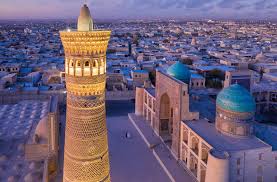
The identity of the Uzbekistan people is not a recent phenomenon but the culmination of layers upon layers of historical influence. For over two millennia, the territory of modern Uzbekistan was a central hub of the Silk Road, where Sogdian merchants, Persian scholars, Turkic warriors, and later Mongol conquerors intermingled. This constant flow of peoples created a unique cultural crucible where the Uzbekistan people developed a sophisticated urban culture centered on oasis cities like Samarkand, Bukhara, and Khiva, distinct from the nomadic traditions of their neighbors.
The modern ethnogenesis of the Uzbekistan people solidified between the 15th and 16th centuries with the arrival of nomadic Uzbek tribes under Muhammad Shaybani, who merged with the established Turkic and Persian-speaking sedentary populations. This fusion created a distinct identity where the Persian literary tradition and Turkic linguistic roots converged. Understanding this historical depth is crucial, as the Uzbekistan people today carry forward a legacy of scholarship, craftsmanship, and trade that has made them renowned throughout the Muslim world for centuries.
The Unwavering Tradition of Hospitality
If there is one defining characteristic that the Uzbekistan people are universally known for, it is mehmondo’stlik—a concept of hospitality that transcends mere politeness to become a cultural imperative. When a guest arrives at an Uzbek home, it is considered a blessing, and the host’s honor is directly tied to how well the guest is treated. This tradition dictates that no visitor should leave hungry, thirsty, or without a gift, reflecting a deep-seated belief that the guest is sent by God. For the Uzbekistan people, this is not a performative act but a genuine expression of social and spiritual duty.
This hospitality manifests in elaborate rituals, from the offering of green tea (ko’k choy) poured in small cups to assess the guest’s comfort, to the grand dastarkhan—the table spread laden with bread, sweets, pilaf, and fruit. In both rural villages and urban apartments, the principle remains unchanged. Business interactions often begin with tea and conversation before any deal is discussed, as the Uzbekistan people prioritize relationship-building over transactional efficiency. This cultural trait makes visitors feel immediately welcomed and underscores a society where social bonds are the currency of daily life.
Social Structure: The Mahalla System
The social fabric of the Uzbekistan people is woven through the mahalla, a traditional neighborhood community that has served as the fundamental unit of social organization for centuries. Unlike a simple administrative district, the mahalla is a self-governing entity where neighbors know each other intimately, share in life’s celebrations and sorrows, and collectively maintain social order. This institution predates Soviet rule and survived it, adapting to become a powerful informal network that bridges the gap between the state and the individual.
In a mahalla, the concept of privacy is balanced with profound communal responsibility. If a family faces hardship, the mahalla organizes support; if a wedding occurs, the entire neighborhood participates. The aksakal (literally “white beard”)—elders who command respect through wisdom and experience—act as informal arbiters of disputes and guardians of tradition. For the Uzbekistan people, this structure ensures that no one is isolated, creating a safety net that is both emotional and practical. Even as urbanization grows, the mahalla spirit persists in how Uzbeks interact in apartment complexes and new developments, proving its resilience as a cornerstone of national character.
Family Values and Generational Dynamics
The family unit stands as the absolute cornerstone of life for the Uzbekistan people, extending beyond the nuclear model to encompass a complex network of extended relatives, in-laws, and ancestors. Multigenerational households remain common, particularly outside the capital, Tashkent, where grandparents play an active role in raising children and preserving cultural knowledge. Respect for elders is not merely encouraged but is considered a sacred duty, with younger family members expected to defer to parental and grandparental wisdom on matters ranging from marriage to career choices.
This familial structure creates a distinct generational dynamic that is currently evolving. While the older generation of the Uzbekistan people often retains strict adherence to Soviet-era secularism blended with Islamic traditions, the youth are navigating a globalized world through social media and international education. Interestingly, rather than causing a rift, this has led to a hybrid identity where young Uzbeks embrace modern technology and fashion while still honoring family obligations. Weddings, which can involve hundreds of guests and last several days, remain the ultimate expression of family solidarity, often representing significant financial and social investments that reinforce bonds across generations.
Language and Communication Styles
The linguistic landscape of the Uzbekistan people is characterized by a fascinating duality and a deep history of multilingualism. The official language, Uzbek, is a Turkic language with significant Persian, Arabic, and Russian lexical influences, reflecting centuries of cultural synthesis. While Soviet-era policies promoted Russian as the language of interethnic communication and prestige, independence in 1991 initiated a gradual but determined shift toward the revitalization of Uzbek. Today, younger generations in urban centers are increasingly fluent in English, while Russian remains widely spoken, particularly among the older population and in Tashkent.
Communication among the Uzbekistan people is notably indirect, subtle, and context-driven, valuing harmony over blunt honesty. Non-verbal cues, pauses, and the ability to “save face” are paramount in social and business interactions. A direct “no” is often avoided; instead, one might hear “Inshallah” (God willing) or a vague promise to consider an offer. This style can be perplexing to outsiders accustomed to direct communication, but it reflects a culture deeply committed to maintaining relationships and avoiding confrontation. Learning to read these nuances is essential for anyone seeking to build lasting connections with the Uzbekistan people.
The Role of Religion in Daily Life
Islam is the predominant faith among the Uzbekistan people, with over 90% of the population identifying as Muslim, primarily following the Hanafi school of Sunni Islam. However, the practice of religion here is distinctively cultural and moderate, shaped by decades of Soviet secularism and a pre-Islamic heritage of Zoroastrian and shamanistic traditions. For most Uzbeks, Islam is interwoven with cultural identity—visible in life-cycle rituals like births (beshik-toyi), weddings (nikoh), and funerals (janaza), rather than strictly observant daily practices.
The past three decades have witnessed a significant religious revival, with mosques being rebuilt, Islamic education expanding, and traditions like Ramadan fasting and hajj pilgrimages becoming more common. Yet, the Uzbekistan people largely practice a form of Islam that coexists comfortably with modern life and retains elements of Sufi mysticism, particularly in rural areas. Shrines (mazars) dedicated to local saints are visited by people seeking blessings, illustrating a folk Islam that emphasizes spiritual intercession. This nuanced religious landscape means that while faith is deeply personal, it remains a unifying cultural thread rather than a divisive political force.
Traditional Attire and Modern Fashion
The traditional attire of the Uzbekistan people offers a vivid window into regional identities, social status, and cultural preservation. For men, the chapan—a striped, quilted silk or cotton coat—has been a symbol of dignity and respect for centuries, often given as a gift of honor at weddings and significant events. Women traditionally wear brightly colored kuylak (dresses) paired with lozim (trousers) and, particularly in older generations, the paranji or lachak (head coverings) in certain regions like the Fergana Valley. The intricate suzani embroidery adorning these garments represents not just clothing but heirlooms of family history and female craftsmanship.
Today, a fascinating fusion defines how the Uzbekistan people dress. In cities like Tashkent and Samarkand, young professionals wear contemporary Western business attire, yet traditional elements persist. It is common to see a businessman in a sharp suit paired with a traditional doppi (skullcap), or a young woman combining a modern dress with hand-embroidered national accessories. The government has actively promoted national dress, especially through initiatives like “Milliy libos” (National Dress) campaigns, framing it as a pillar of cultural sovereignty. This blend reflects a society comfortable with modernity yet deeply proud of its visual heritage.
Culinary Traditions and Social Dining
To understand the Uzbekistan people, one must understand their relationship with food, where culinary traditions function as the primary medium for social bonding and cultural expression. Palov (or plov), the national dish of rice, meat, carrots, and spices, is far more than a meal—it is a ceremonial centerpiece prepared by master chefs (oshpaz) for weddings, holidays, and community gatherings. Each region boasts its own variation, and the preparation itself is a ritual, often performed by men in large outdoor kazans (cauldrons), emphasizing communal participation.
The culture of bread, or non, holds almost sacred significance. For the Uzbekistan people, bread is considered life-sustaining and must be treated with the utmost respect—placed on the dastarkhan right-side up, never thrown away, and always broken by hand rather than cut with a knife. The dastarkhan itself is a symbol of generosity, laden with tea, fresh fruits, dried nuts, and sweets. Meals are leisurely, social affairs where hierarchy is observed—elders eat first, and the host ensures every guest’s plate is full. This culinary culture underscores a society where food is never merely sustenance but a profound expression of respect, community, and shared identity.
Arts, Crafts, and Creative Expression
The artistic heritage of the Uzbekistan people represents a continuous thread connecting contemporary creators to the master artisans of the Silk Road. For centuries, cities like Bukhara and Samarkand were renowned centers of craftsmanship, producing ceramics, textiles, metalwork, and miniature painting that adorned palaces and mosques across Asia. This legacy remains vibrantly alive, with families of potters in Rishtan preserving ancient glazing techniques, silk weavers in Margilan continuing the tradition of ikat (a resist-dyeing method) that has become synonymous with Uzbek textile art.
Music and oral tradition form another pillar of creative identity. The shashmaqam, a classical genre of Central Asian music blending Persian and Turkic influences, was recognized by UNESCO as a Masterpiece of the Oral and Intangible Heritage of Humanity. For the Uzbekistan people, music is integral to all life events—from the melodic laments of lapar (folk songs) at gatherings to the vibrant rhythms of doira (frame drum) at weddings. Contemporary art scenes are flourishing in Tashkent, where young artists reinterpret traditional motifs through modern mediums. This dynamic artistic landscape demonstrates how the Uzbekistan people preserve their heritage not as a museum piece but as a living, evolving expression of national identity.
Urban Versus Rural Lifestyles
A significant cultural dichotomy exists between the urban and rural experiences of the Uzbekistan people, each offering distinct rhythms of life and value systems. In major cities like Tashkent, Samarkand, and Bukhara, residents navigate a fast-paced environment marked by Soviet-era infrastructure, modern cafes, co-working spaces, and exposure to global trends. Urban Uzbeks are generally more educated, with higher rates of university attendance and English proficiency, and they experience greater exposure to international media and business practices. The anonymity of city life offers a degree of personal freedom less common in traditional settings.
Conversely, rural life, where over 50% of the population still resides, remains deeply rooted in agricultural cycles and extended family structures. In villages and smaller towns, the mahalla exerts stronger influence, social circles are tighter, and traditions are observed with greater strictness. For rural Uzbekistan people, life revolves around cotton, wheat, and fruit harvests, with community labor often organized collectively. While economic opportunities are fewer, social support networks are denser, and the pace of life allows for deeper engagement in cultural and religious practices. This urban-rural dynamic creates a spectrum of experiences within the country, with many families maintaining ties across both worlds—a pattern that influences migration, marriage patterns, and national political discourse.
The Diaspora and Global Connections
The Uzbekistan people are not confined to the borders of their nation; a significant and influential diaspora exists worldwide, reshaping global perceptions of Uzbek culture. Following the collapse of the Soviet Union, waves of emigration—particularly among Bukharan Jews, ethnic Germans, and highly skilled professionals—established vibrant communities in the United States, Israel, Germany, and Turkey. More recently, labor migration has seen millions of Uzbeks working in Russia, Kazakhstan, and South Korea, forming transnational families that remit billions of dollars annually, which constitute a crucial pillar of the national economy.
This diaspora experience has created a unique dynamic of identity preservation and adaptation. In places like New York’s Rego Park neighborhood or Toronto’s North York, the Uzbekistan people have established community centers, restaurants, and cultural festivals that serve as anchors for younger generations born abroad. These global Uzbeks often maintain stronger nostalgic ties to tradition than those living in rapidly modernizing Tashkent, engaging in what anthropologists call “cultural conservation.” The diaspora also serves as cultural ambassadors, introducing plov to foodies in Berlin, ikat to fashion designers in Paris, and the traditions of Central Asia to a global audience, effectively expanding the reach of Uzbek identity far beyond its geographical origins.
Business Culture and Economic Mindset
The business environment of the Uzbekistan people is undergoing a remarkable transformation, moving from a Soviet-era command economy toward a more open, market-driven system. Historically, business culture was characterized by informal networks known as blat (connections) inherited from the Soviet period, where personal relationships often determined economic outcomes. Today, under ongoing economic liberalization, a new generation of entrepreneurs is emerging, blending traditional relationship-based approaches with modern management practices. The hospitality that defines social life extends into business, where trust built over shared meals and multiple meetings often precedes formal contracts.
Key industries such as cotton, gold, natural gas, and an expanding tourism sector shape the economic landscape. The Uzbekistan people have long demonstrated a merchant’s instinct—a legacy of the Silk Road—that translates today into a strong culture of negotiation and market savvy. Bazaars (markets) remain the heart of commercial life, where haggling is expected and social bonds between merchants and regular customers span generations. For international investors, understanding this cultural context is essential: patience, respect for hierarchy, and genuine relationship-building are prerequisites for successful partnerships. As the country aims to double its GDP by 2030, the entrepreneurial spirit of the Uzbekistan people is positioned to drive significant economic evolution.
Education, Literacy, and Intellectual Traditions
The Uzbekistan people have a long-standing reverence for education, rooted in the medieval Islamic tradition of ilm (knowledge) that produced scholars like Al-Khwarizmi (founder of algebra) and Avicenna (philosopher and physician). This intellectual heritage was reinforced during the Soviet era, which achieved near-universal literacy—a legacy that remains intact today, with literacy rates exceeding 99%. Education is highly valued as a pathway to social mobility, and families invest significant resources in their children’s academic success, often supplementing public schooling with private tutors in languages, mathematics, and music.
The post-independence period has seen a complex educational evolution. While the government has expanded university access and established prestigious institutions like Westminster International University in Tashkent, challenges remain in curriculum modernization and alignment with global labor market demands. A growing number of the Uzbekistan people seek educational opportunities abroad, particularly in South Korea, Germany, and the United States, creating a brain circulation dynamic where globally trained youth return with new skills and perspectives. This focus on education, combined with a young population (over 30% under 15 years old), positions the Uzbekistan people as a demographic poised for significant human capital development in the coming decades.
Gender Roles and Evolving Dynamics
Gender dynamics among the Uzbekistan people represent a complex interplay of traditional expectations, Soviet-era policies of formal equality, and contemporary shifts toward greater female empowerment. Traditionally, Uzbek society was patriarchal, with clearly defined spheres: men as primary breadwinners and public representatives, women as caretakers of home and children. The Soviet period introduced formal legal equality, high female literacy, and integration of women into the workforce, particularly in education and medicine, creating a foundation for women’s participation in public life that persists today.
In contemporary Uzbekistan, women hold significant positions in government, judiciary, and business, though traditional expectations often create a double burden of professional and domestic responsibilities. The Uzbekistan people are witnessing a generational shift, with younger urban women delaying marriage, pursuing higher education, and asserting greater agency in career and life choices. Government policies have increasingly focused on combating gender-based violence and supporting women’s entrepreneurship. However, cultural norms around family honor and marriage remain strong, and patriarchal attitudes persist, particularly in rural areas. The result is a society in transition, where women navigate between claiming hard-won opportunities and honoring family expectations—a dynamic that shapes family structures, economic patterns, and social policy debates.
Festivals, Celebrations, and National Holidays
The calendar of the Uzbekistan people is marked by a vibrant succession of festivals that blend ancient Zoroastrian roots, Islamic traditions, and Soviet-era secular holidays. Navruz (Persian New Year), celebrated on March 21, stands as the most universally cherished festival, marking the spring equinox with rituals of purification, family gatherings, and the preparation of sumalak—a sweet wheat germ dish prepared communally over days and nights of singing and storytelling. This pre-Islamic celebration transcends religious and ethnic lines, embodying a shared cultural identity that all Uzbekistan people embrace.
Religious holidays, particularly Eid al-Fitr (ending Ramadan) and Eid al-Adha (Feast of Sacrifice), are observed with special prayers, charity, and family feasts. Soviet-era holidays like Independence Day (September 1) and Defenders of the Fatherland Day continue to be celebrated, often with public concerts, parades, and a strong emphasis on national pride. Weddings (toy) deserve special mention as community-defining events that can involve hundreds of guests, elaborate rituals, and significant financial investment. For the Uzbekistan people, these celebrations serve as crucial mechanisms for reinforcing social bonds, transmitting cultural knowledge to youth, and asserting identity in an increasingly globalized world.
Contemporary Challenges and Resilience
Like any society, the Uzbekistan people face significant contemporary challenges that test their renowned resilience. Economic inequality, while less stark than in many former Soviet republics, has grown with market reforms, creating disparities between urban centers and rural regions, and between those with access to international opportunities and those without. Environmental crises, particularly the Aral Sea ecological disaster in the autonomous Republic of Karakalpakstan, have devastated communities and created public health crises that the Uzbekistan people have had to confront with limited resources. Additionally, the country’s authoritarian political structure, while providing stability, has constrained civil society and political expression.
Yet, the response to these challenges reveals the enduring strength of the Uzbekistan people. Community-based initiatives have emerged to address environmental issues, with grassroots efforts to plant saxaul trees to stabilize the Aral Sea bed. Civil society organizations, though operating within constraints, have made significant strides in areas like disability rights, women’s empowerment, and cultural preservation. The people’s capacity for mahalla-level mutual aid, combined with a pragmatic optimism, suggests a society that adapts and perseveres. The opening of the country to tourism and foreign investment since 2016 has created new pathways for engagement, and the Uzbekistan people increasingly see themselves as active participants in global conversations rather than passive subjects of history.
The Future: Youth, Technology, and National Identity
The future of the Uzbekistan people rests firmly with its youth—a demographic dividend that presents both immense potential and significant challenges. With over 60% of the population under 30, Uzbekistan is one of the youngest countries in Central Asia, and this generation is fundamentally different from its predecessors. They are digitally native, with smartphone penetration surging and social media platforms like Instagram and Telegram reshaping how they connect, consume information, and form opinions. This connectivity exposes them to global cultural flows while also enabling new forms of civic engagement and entrepreneurship.
This youth cohort is actively redefining what it means to be part of the Uzbekistan people. They are embracing Uzbek language and culture with renewed pride while fluent in English and Russian, positioning themselves as natural bridges between Central Asia and the world. Young entrepreneurs are launching startups, tech companies, and creative industries that challenge traditional economic structures. Simultaneously, they navigate tensions between modernity and tradition, global aspirations and family obligations. How this generation balances these forces will shape Uzbekistan’s trajectory for decades. The energy, education, and ambition of young Uzbeks suggest a nation poised not merely to preserve its rich heritage but to actively craft a new chapter in its millennia-long story.
| Aspect | Traditional View | Contemporary Reality | Key Insight for Engagement |
|---|---|---|---|
| Family Structure | Multigenerational households; patriarch-led | Nuclear families rising in cities; increased female workforce participation | Respect for elders remains paramount, but youth autonomy is growing |
| Language Use | Uzbek at home; Russian for official/urban use | Uzbek dominant in government; English rising among youth | Basic Uzbek phrases earn respect; Russian still useful for older generations |
| Religious Practice | Culturally Islamic with Sufi influences; state-controlled | Revival of mosque attendance; private practice common | Religion is personal; avoid assumptions based on appearance |
| Economic Activity | Agriculture, state employment, informal trade | Expanding private sector, IT, tourism, labor migration abroad | Relationships matter more than contracts; patience is essential |
| Gender Dynamics | Separate spheres; men in public, women domestic | Women in professions, education; traditional expectations persist | Acknowledge women’s achievements while understanding family honor norms |
| Cultural Identity | Defined by Soviet categories (nationality) | Renewed focus on pre-Soviet heritage, Silk Road pride | Uzbeks are proud of their distinct identity separate from regional neighbors |
| Technology Adoption | Limited; state-controlled media | High smartphone penetration; social media as primary news source | Digital engagement is key; Telegram and Instagram are dominant platforms |
Quote
“The hospitality of the Uzbekistan people is not a custom but a worldview. When we say ‘Mehmon otadan ulug’—‘A guest is greater than a father’—it is not hyperbole. It is the foundation of our humanity, the principle that has allowed us to survive invasions, empires, and deserts for three thousand years. To understand us, you must first sit at our table.” — Rustam, a resident of Bukhara’s old city, reflecting on his culture while hosting travelers in his family home.
Conclusion
The Uzbekistan people represent a remarkable synthesis of ancient tradition and contemporary dynamism, a society where the hospitality of the Silk Road survives in digital-era connections, and where family bonds provide stability amid rapid change. From the intricate embroidery of
a suzani to the communal preparation of palov, from the wisdom of the aksakal to the ambitions of startup founders in Tashkent, the threads of identity weave together into a fabric that is both resilient and evolving. For those who take the time to look beyond stereotypes, what emerges is a people defined not merely by their storied past but by their open-hearted engagement with the world—a population that welcomes strangers, honors ancestors, and looks to the future with characteristic optimism. Understanding the Uzbekistan people is to understand the soul of Central Asia itself: complex, enduring, and endlessly welcoming.
FAQ
What are the Uzbekistan people known for culturally?
The Uzbekistan people are world-renowned for their extraordinary hospitality, a deeply ingrained cultural value where guests are treated with the highest honor. They are also celebrated for their rich traditions in craftmanship, including silk weaving, ceramics, and the famous suzani embroidery, as well as their culinary heritage centered around dishes like palov (plov) and the sacred tradition of bread sharing.
What is the primary language spoken by the Uzbekistan people?
The primary language is Uzbek, a Turkic language with significant Persian, Arabic, and Russian influences. Russian remains widely spoken, particularly in urban areas and among older generations, while English proficiency is growing rapidly among younger people, especially in Tashkent and other major cities.
How do traditional neighborhoods function for the Uzbekistan people?
Traditional neighborhoods, called mahallas, function as self-governing community units that form the social backbone of Uzbek society. These close-knit communities provide mutual support, organize celebrations and funerals, maintain social order through elected elders (aksakals), and ensure that no family faces hardship alone, preserving cultural traditions across generations.
Is the Uzbekistan people’s culture more influenced by Persian or Turkic traditions?
The culture of the Uzbekistan people is a unique synthesis of both Persian and Turkic traditions, reflecting their position at the crossroads of civilizations. While the Uzbek language is Turkic, Persian influences are profound in literature, classical music (shashmaqam), architecture, and cuisine, creating a blended identity that is distinctly Uzbek rather than strictly one or the other.
How is the younger generation of the Uzbekistan people different from their parents?
The younger generation of the Uzbekistan people is more globally connected, digitally native, and multilingual than their parents. They are embracing entrepreneurship, technology, and creative fields while maintaining strong family ties and cultural pride. This generation is actively reshaping national identity, balancing modernization with the preservation of their rich heritage.