




Vince McMahon Now: The Definitive Look at the Legacy, Power, and Future of the Disgraced Wrestling Titan
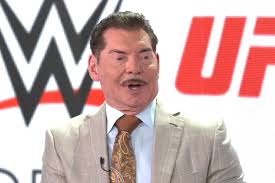
For over four decades, Vince McMahon was the unmistakable face of professional wrestling—a polarizing visionary who transformed a regional sideshow into a global multimedia empire. But the question on everyone’s mind today is simple yet profound: Vince McMahon now represents a complex story of fallen power, ongoing legal battles, and a legacy that the industry he built is still struggling to reconcile. After resigning from TKO Group Holdings in early 2023 amidst a cascade of sexual misconduct allegations, the 78-year-old former chairman has largely retreated from the public eye, yet his shadow looms larger than ever over World Wrestling Entertainment.
This is not merely a story about a corporate ousting; it is an examination of what happens when an individual’s institutional grip becomes indistinguishable from the institution itself. To understand Vince McMahon now, one must understand the seismic shift in power that occurred when the man who once micromanaged everything from scripted promos to talent contracts was forced to sever ties with the company he built from the ground up. This article serves as the definitive authority on his current status, the ongoing federal investigations, his residual influence, and what the post-McMahon era truly means for the future of sports entertainment.
The Resignation That Redefined an Empire
The departure of Vince McMahon in June 2022, followed by his botched return and subsequent resignation in early 2023, was not a standard retirement. It was a corporate coup driven by undeniable external pressure. After a Wall Street Journal investigation revealed that McMahon had paid millions in hush money to women alleging sexual misconduct and infidelity—payments that were not recorded on company books—the board of directors launched a special committee investigation. His initial retirement was positioned as a graceful exit, but his attempt to force his way back onto the board in early 2023 revealed a desperate desire to retain control that ultimately backfired spectacularly.
When the board refused to reinstate him, McMahon was forced to sell approximately $100 million in stock and resign from his position as executive chairman of TKO Group Holdings, the parent company formed after WWE’s merger with UFC. This moment marked the first time in history that the company operated without his direct involvement. For an executive who famously prided himself on never taking a day off, Vince McMahon now finds himself on the outside looking in—a position that seemed unimaginable just a few years ago when he was still the final authority on everything from WrestleMania main events to the color of the ring ropes.
The Federal Investigation and Legal Exposures
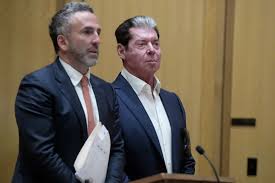
While the corporate exit was swift, the legal ramifications have been anything but. The most pressing element concerning Vince McMahon now is the ongoing federal investigation. In July 2023, federal law enforcement agents executed a search warrant on McMahon’s phone and served a grand jury subpoena. The investigation centers on whether McMahon attempted to conceal the hush money payments to cover up sexual misconduct allegations, potentially violating federal laws regarding corporate record-keeping and financial disclosures.
The legal jeopardy is compounded by a scathing lawsuit filed by Janel Grant, a former WWE employee, in early 2024. Grant’s lawsuit alleges sexual assault and trafficking, naming McMahon, former WWE executive John Laurinaitis, and the company itself as defendants. The lawsuit contains graphic details and claims that McMahon shared explicit images of Grant with other WWE employees without her consent. In response to the fallout, TKO and WWE have distanced themselves, with TKO’s current leadership emphasizing that McMahon no longer controls the company’s operations or governance.
The Stripping of Institutional Power
One of the most significant shifts in understanding Vince McMahon now is the realization that his power structure has been systematically dismantled. Following the merger with UFC to form TKO, the corporate governance structure was redesigned to ensure that no single individual could exert the type of autocratic control McMahon once wielded. The board is now composed of independent directors and executives from Endeavor, including CEO Ari Emanuel, who has made it clear that McMahon’s era of unchecked authority is over.
This loss of institutional power is more than symbolic. Previously, McMahon’s influence permeated every decision—talent negotiations, creative direction, network deals, and even real estate acquisitions. Today, those decisions fall under the purview of WWE President Nick Khan and Chief Content Officer Paul “Triple H” Levesque. For the first time in the company’s history, creative direction is being handled by a team that does not require McMahon’s final sign-off. This structural change represents a fundamental reordering of how the wrestling industry operates at its highest level.
Financial Position and Stock Holdings
Despite his resignation and the accompanying scandals, Vince McMahon now remains an extraordinarily wealthy individual, though his financial relationship with the company has changed dramatically. After selling hundreds of millions of dollars worth of TKO stock to cover legal expenses and forced divestitures, his ownership stake has been significantly reduced. At the height of his power, McMahon controlled the majority of WWE’s voting shares. Now, he retains a minority stake with no operational control.
His current financial situation is a study in contradictions. On one hand, he still holds enough equity to make him a multimillionaire several times over, insulating him from immediate financial ruin. On the other hand, the legal costs associated with defending against the federal investigation, the Janel Grant lawsuit, and potential civil suits are mounting daily. Legal experts note that the discovery process in these cases could expose even more damaging evidence, potentially leading to further financial settlements or judgments that could erode his fortune. The question of whether he will be forced to sell his remaining stake to cover liabilities remains an open one.
The Creative Void and New Leadership
When discussing Vince McMahon now, it is impossible to ignore the creative vacuum left in his wake. For decades, McMahon was the singular visionary—for better or worse—who dictated the narrative direction of WWE. His creative process was notoriously hands-on, often rewriting entire shows hours before airtime and making unpredictable decisions that frustrated talent but kept the product feeling volatile and urgent. In his absence, Paul “Triple H” Levesque has assumed the role of Chief Content Officer, bringing a fundamentally different approach to creative development.
Levesque’s leadership is characterized by long-term storytelling, character consistency, and a greater emphasis on in-ring quality. The shift from McMahon’s chaotic, “live for the moment” philosophy to Levesque’s more structured, continuity-driven approach represents a cultural revolution within the company. Talent relations have reportedly improved, with many performers noting that the unpredictable stress of McMahon’s late-night rewrites has been replaced by a more collaborative environment. However, the long-term question remains: can the post-McMahon era maintain the same level of cultural relevance without the manic energy that defined the McMahon era?
The Residual Influence and Silent Presence
A common misconception is that Vince McMahon has completely vanished from the wrestling landscape. In reality, Vince McMahon now occupies a strange limbo—absent from daily operations but still a presence in the periphery. Reports suggest that he still maintains contact with a small circle of longtime associates within the company, though formal communication channels have been severed. The corporate offices in Stamford, Connecticut, have been redesigned, and his former office no longer serves as a command center.
There is also the psychological influence to consider. For talent who spent their entire careers operating under McMahon’s direct scrutiny, the sudden absence creates a unique form of pressure. Some performers have admitted in interviews that they still find themselves bracing for a McMahon rewrite that never comes. This lingering influence is a testament to how deeply his methods were embedded into the company’s DNA. While he no longer holds a title or an office, his shadow remains a reference point—a ghost of an authoritarian past that the new regime is actively working to move beyond.
The Janel Grant Lawsuit: A Defining Allegation
If there is a single document that encapsulates the severity of the allegations against McMahon, it is the Janel Grant lawsuit. Filed in the U.S. District Court for Connecticut, the complaint paints a harrowing picture of alleged abuse that took place within WWE’s corporate headquarters. The lawsuit alleges that McMahon used his position to manipulate Grant into a sexual relationship under the guise of employment, and that he subsequently trafficked her to other executives. For those trying to understand Vince McMahon now, this lawsuit represents the most significant legal and reputational threat he faces.
WWE’s initial response to the lawsuit was to issue a statement emphasizing that McMahon no longer controls the company, a strategic move to distance the current entity from the alleged actions of its former leader. However, the legal proceedings are still in their early stages. McMahon’s legal team has filed motions to compel arbitration, seeking to keep the details of the case out of the public eye. Grant’s legal team has pushed back aggressively, arguing that the nature of the allegations requires public accountability. The outcome of this case could determine not only McMahon’s financial future but also his lasting public legacy.
Comparison of Leadership Eras: McMahon vs. TKO Management
| Leadership Aspect | Vince McMahon Era (1982–2022) | Current TKO/WWE Leadership (2023–Present) |
|---|---|---|
| Creative Control | Centralized, singular authority; final say on all creative decisions | Distributed team structure; Paul Levesque leads creative with board oversight |
| Talent Relations | Micromanaged; often volatile; contracts negotiated directly by McMahon | Professionalized HR structure; more stable contract negotiations and performer support |
| Corporate Governance | Family-controlled; limited independent board oversight | Independent board with Endeavor representation; strict governance protocols |
| Financial Strategy | Aggressive expansion; McMahon as primary decision-maker for deals | Institutionalized strategy; led by Nick Khan and Ari Emanuel |
| Public Relations | Combative; McMahon frequently appeared on camera to address controversies | Controlled, corporate messaging; distancing from former leadership scandals |
| Risk Management | High tolerance for legal and reputational risk | Conservative approach; proactive compliance and legal safeguards |
This table illustrates the stark contrast between the autocratic, high-risk style of the McMahon era and the institutional, compliance-focused approach of the current TKO regime. It is precisely this structural transformation that defines Vince McMahon now as a figure from a bygone era of corporate governance.
The Merger with UFC and Endeavor’s Role
The merger between WWE and UFC to form TKO Group Holdings was finalized in September 2023, a deal that fundamentally altered the landscape of combat sports and entertainment. For McMahon, the merger was initially positioned as a triumph—a capstone to his career that would see him serve as executive chairman of a combined entity valued at over $21 billion. However, the scandals that erupted shortly after the merger’s announcement transformed what should have been his victory lap into the final chapter of his downfall.
Endeavor CEO Ari Emanuel has been explicit about his desire to distance the company from the McMahon scandals. In investor calls and public statements, Emanuel has emphasized that the current leadership team is focused on growth, compliance, and shareholder value—priorities that do not include managing the fallout from McMahon’s personal conduct. The presence of a disciplined, corporate leadership structure has been a shock to the system for longtime WWE employees accustomed to McMahon’s improvisational style. For Vince McMahon now, the merger represents the mechanism through which his control was permanently stripped away.
Public Appearances and Media Silence
One of the most noticeable changes in McMahon’s behavior since his resignation is his complete withdrawal from public life. For decades, McMahon was a ubiquitous presence—appearing on weekly television, conducting media interviews, and even starring in his own reality show. Today, Vince McMahon now is almost never seen in public. He has not appeared on WWE programming since his brief, awkward return in early 2023, and he has declined all interview requests from major media outlets.
This silence is a deliberate legal strategy as much as a personal choice. With active federal investigations and a high-profile civil lawsuit pending, any public statement McMahon makes could be used against him in court. His legal team has advised total silence, and he has complied. The contrast between his current reclusiveness and his former status as one of the most recognizable executives in American business could not be more stark. For fans who grew up watching him strut to the ring at WrestleMania, his absence is as deafening as his presence once was commanding.
Impact on WWE Talent and Culture
The cultural shift within WWE since McMahon’s departure has been profound. Talents who were once afraid to speak out about working conditions or creative direction have found a more open environment under Levesque’s leadership. Several high-profile performers who had previously requested releases from the company under McMahon have returned, citing the improved working environment. The locker room atmosphere, long described as cutthroat and stressful, has reportedly become more collaborative.
However, it would be inaccurate to suggest that the culture has changed overnight. Many of the institutional practices McMahon implemented over 40 years remain in place, including the demanding travel schedule and the pressure to perform at a high level year-round. What has changed is the unpredictability of management. Under McMahon, talent never knew when a creative decision would be reversed or a push would be abandoned. Under the new regime, there is a greater sense of consistency. For Vince McMahon now, watching this cultural evolution from the sidelines must be a surreal experience, given that he spent a lifetime cultivating the very environment that is now being reformed.
The Family Dynamic: Shane, Stephanie, and Triple H
The McMahon family has been at the center of wrestling’s power structure for decades, but the current dynamic is fraught with tension. Stephanie McMahon, who served as co-CEO alongside Nick Khan during her father’s initial departure, resigned from her position after the merger with Endeavor. She has since taken a step back from the company, focusing on philanthropic work and family. Shane McMahon, who had a tumultuous relationship with his father and was ousted from the company after a backstage incident at the 2022 Royal Rumble, remains on the outside.
Paul “Triple H” Levesque, Stephanie’s husband, now holds the most significant creative power in the company’s history outside of Vince himself. This creates a complex family dynamic. While Levesque has maintained a professional relationship with his father-in-law, the circumstances of McMahon’s departure—and the allegations that precipitated it—have undoubtedly created personal strain. The family that once presented a united front as the ruling dynasty of wrestling is now fractured, with each member navigating their own relationship to the patriarch’s legacy. For anyone analyzing Vince McMahon now, the family dynamic is an essential piece of the puzzle.
The Federal Investigation’s Unfolding Timeline
The federal investigation into McMahon’s conduct is perhaps the most significant unknown variable in his current situation. Federal prosecutors in the Southern District of New York have been investigating whether McMahon violated federal law by failing to record the hush money payments as corporate expenses. If prosecutors determine that the payments were intended to conceal misconduct that could affect the company’s stock price, they could pursue charges including wire fraud or conspiracy.
The timeline of the investigation remains opaque. Legal experts note that federal investigations of this nature often take years to resolve, particularly when they involve complex financial transactions and high-profile targets. McMahon has reportedly been cooperating with investigators, though the extent of that cooperation is unclear. For Vince McMahon now, the federal investigation represents an existential threat. A criminal conviction would not only carry potential prison time but would also permanently cement his legacy as a figure who fell from grace due to illegal conduct, rather than merely a corporate power struggle.
Comparison With Other Fallen Media Moguls
To fully understand the significance of McMahon’s fall, it is useful to compare his trajectory to other media moguls who faced similar downfalls. Figures like Harvey Weinstein, Roger Ailes, and Les Moonves all experienced rapid, humiliating exits from the companies they built or controlled after allegations of sexual misconduct emerged. Like McMahon, each of these men was considered untouchable until they weren’t. The parallels are striking: all were accused of creating toxic workplace cultures, all used corporate funds to silence accusers, and all were ultimately forced out by boards of directors who could no longer ignore the legal and reputational risks.
Yet there are important distinctions. Unlike Weinstein, who is serving a prison sentence, McMahon has not been criminally charged—at least not yet. Unlike Ailes and Moonves, who died shortly after their downfalls, McMahon is still alive and fighting his legal battles. The outcome of the federal investigation will determine whether he joins the ranks of media executives who faced criminal consequences or whether he manages to settle his civil cases and live out his remaining years in relative obscurity. For now, Vince McMahon now occupies a unique space in this rogues’ gallery—a man whose empire was dismantled, but whose fate remains undecided.
The Role of the Wall Street Journal in His Downfall
No single entity played a larger role in exposing the allegations against McMahon than the Wall Street Journal. The paper’s investigative reporters spent months digging into the secret payments McMahon made to women over the course of several years. Their reporting revealed not only the existence of the payments but also the fact that McMahon had attempted to hide them from the board of directors. This reporting triggered the board’s special investigation and set in motion the chain of events that led to his resignations.
The Journal’s role in the story is a reminder of the power of investigative journalism in the modern media landscape. Even a figure as powerful as McMahon, who had spent decades cultivating relationships with media outlets and controlling his public narrative, could not withstand the scrutiny of reporters willing to dig into the details. For Vince McMahon now, the Wall Street Journal reporting is the primary reason he is no longer in power. Without those initial disclosures, it is entirely possible he would still be running WWE today, with the allegations remaining hidden.
How the WWE Universe Has Responded
The fanbase, known as the WWE Universe, has had a complex and divided response to McMahon’s downfall. On one side are fans who feel vindicated—who long suspected that McMahon’s backstage behavior was toxic and who are pleased to see him held accountable. On the other side are fans who credit McMahon with creating the product they love and who view his removal as an overreaction driven by corporate interests rather than genuine concern for victims.
What is notable is how quickly the product has evolved under new leadership. Ratings and attendance have remained strong, and in some cases have improved, suggesting that the average viewer does not miss McMahon’s on-screen presence or creative input. The financial performance of TKO has also been robust, with the stock price stabilizing after the initial turmoil of the merger. For Vince McMahon now, the fact that the company is thriving without him is perhaps the most painful reality of all. He spent his life believing he was indispensable, and the evidence suggests otherwise.
Hypothetical Scenarios: What If He Returns?
Given McMahon’s history of surprise comebacks—he famously “retired” in 1994 only to return months later—it is natural to wonder whether he might attempt another return. However, the circumstances now are fundamentally different from any previous retirement or departure. The federal investigation, the civil lawsuit, and the corporate governance structure of TKO all present insurmountable obstacles to a return. The board has made it clear that McMahon is not welcome in any operational capacity.
A hypothetical return would require several unlikely events to align: the federal investigation would have to close without charges, the Janel Grant lawsuit would have to settle on terms favorable to McMahon, and the TKO board would have to be replaced by allies willing to reinstate him. None of these scenarios appear plausible in the current environment. For Vince McMahon now, the door to power is not merely closed; it has been welded shut. His future, if he has one in wrestling, is as a spectator, not a participant.
The Legacy Question: Visionary or Villain?
Perhaps the most difficult question surrounding McMahon’s current situation is how history will remember him. There is no denying his achievements: he took a regional wrestling promotion and turned it into a global entertainment juggernaut. He pioneered the concept of pay-per-view events with WrestleMania, broke territorial boundaries in the 1980s, and survived the Monday Night Wars to emerge as the dominant force in professional wrestling. His business acumen and willingness to take risks are beyond dispute.
Yet those achievements are now overshadowed by the allegations against him. The same ruthlessness that made him a successful businessman is now being cited as evidence of a pattern of abuse and exploitation. The question of whether one can separate the art from the artist is particularly acute in wrestling, where McMahon was not just a behind-the-scenes executive but also an on-screen character whose persona was intertwined with his real-life power. For Vince McMahon now, the legacy is in flux. Time will tell whether future generations view him primarily as a visionary who built an empire or as a predator who used that empire to enable abuse.
The WWE Hall of Fame Question
One of the most immediate legacy questions involves the WWE Hall of Fame. McMahon was inducted in 2004 as part of the inaugural class, a distinction that seemed permanent at the time. However, in the wake of the allegations, there have been calls for the company to remove him from the Hall of Fame. WWE has not yet taken that step, but it has also not prominently featured McMahon in any recent Hall of Fame ceremonies or programming.
The Hall of Fame situation encapsulates the broader institutional dilemma. On one hand, removing McMahon would be a powerful statement that the company is serious about moving on from his era. On the other hand, it would be a controversial move that would alienate fans who still revere him. The current approach—silence and non-acknowledgment—suggests that the company is waiting to see how the legal proceedings unfold before making a definitive decision. For Vince McMahon now, the Hall of Fame is just one more piece of his legacy that is now in jeopardy.
The Enduring Myth of the Untouchable CEO
McMahon’s fall serves as a case study in the myth of the untouchable CEO. For years, he was portrayed in business media as a visionary who had built an empire through sheer force of will. He cultivated an image of invincibility, appearing on magazine covers and in interviews as a man who had beaten the odds at every turn. The idea that he could be brought down by anything—let alone a series of payments to women—seemed inconceivable to many observers.
Yet the reality is that no CEO is truly untouchable. When the allegations became public and the board’s investigation uncovered evidence of misconduct, the same corporate structures that McMahon had helped create were turned against him. The lesson is that even the most powerful executives are ultimately accountable to their boards, their shareholders, and the legal system. For Vince McMahon now, the myth of invincibility has been thoroughly shattered. He is no longer the untouchable titan of wrestling but a cautionary tale about the limits of unchecked power.
The Future of the McMahon Name in Wrestling
As the company moves forward, one of the lingering questions is whether the McMahon name will ever again hold significance in wrestling. Stephanie McMahon’s departure from the company suggests that she may not be interested in returning, at least in the near term. Shane McMahon’s relationship with the company remains strained. The only McMahon still actively involved in wrestling is Paul Levesque, who carries the name through marriage but is building his own legacy.
It is entirely possible that within a decade, the McMahon name will be a footnote in WWE history—a reference to a bygone era rather than an active part of the company’s identity. This would be a remarkable turn of events for a family that spent nearly half a century at the center of the wrestling world. For Vince McMahon now, the fading of his family’s name from the company he built is perhaps the most poignant symbol of his fall. The dynasty he created is now being systematically dismantled, and there may be no McMahon left to carry it forward.
Reflections from Wrestling Insiders
To provide additional context, it is worth considering the perspectives of wrestling insiders who have spoken about the current situation. Longtime commentator Jim Ross, who worked closely with McMahon for decades, has described the current era as “bittersweet,” acknowledging McMahon’s contributions while expressing sadness at how it has all ended. Similarly, former WWE writer Brian Gewirtz has noted that the creative environment under Levesque feels more stable and less stressful than it did under McMahon.
One particularly insightful observation comes from veteran journalist Dave Meltzer, who has covered wrestling for over 40 years. In a recent interview, Meltzer noted:
“What we’re seeing now is the first real test of whether WWE can exist without Vince McMahon’s direct involvement. The early returns are positive, but the true test will come when the company faces a major crisis—a ratings decline, a talent walkout, a public relations disaster. In the past, McMahon would step in and fix it, for better or worse. Now, we’ll see if the institutional structure can handle that pressure.”
This quote captures the uncertainty that still surrounds the post-McMahon era. The company is thriving now, but the real test of its resilience will come when the inevitable challenges arise. For Vince McMahon now, watching from the sidelines as others navigate those challenges must be a profound and disorienting experience.
Conclusion
The story of Vince McMahon is one of the most dramatic falls from grace in the history of American business. A man who built a billion-dollar empire from the ground up, who revolutionized an entire industry, and who was once considered untouchable is now a pariah, stripped of his power and fighting for his reputation in court and in the court of public opinion. Vince McMahon now represents a cautionary tale about the dangers of unchecked authority, the importance of corporate accountability, and the reality that no one is truly indispensable.
As the federal investigation continues and the Janel Grant lawsuit moves through the legal system, McMahon’s fate remains uncertain. What is clear is that the era of McMahon’s dominance is over. WWE has moved on, and under new leadership, it is thriving. The company he built is now being run by people who are actively working to distance themselves from his legacy. Whether history remembers him as a visionary or a villain—or some complicated combination of both—will depend largely on how the remaining legal battles unfold. For now, the wrestling world watches and waits, knowing that the final chapters of the Vince McMahon story have yet to be written.
FAQ
What is Vince McMahon doing now in 2024?
Vince McMahon is currently out of the public eye, facing ongoing legal challenges. He resigned from his position at TKO Group Holdings in early 2023 and is reportedly focusing on defending himself against a federal investigation and a civil lawsuit filed by former WWE employee Janel Grant. Vince McMahon now has no operational role in WWE or TKO, and he has made no public appearances since his resignation.
Is Vince McMahon still involved with WWE?
No, Vince McMahon is no longer involved with WWE in any operational or creative capacity. Following his resignation from TKO Group Holdings, all ties to the company were severed. The current leadership team, including WWE President Nick Khan and Chief Content Officer Paul “Triple H” Levesque, runs the company without any input from McMahon.
What are the legal charges against Vince McMahon?
As of now, Vince McMahon has not been criminally charged, though he is under federal investigation. The investigation focuses on whether he failed to properly record hush money payments made to women alleging sexual misconduct. Additionally, he is a defendant in a civil lawsuit filed by Janel Grant, which alleges sexual assault and trafficking. Vince McMahon now faces significant legal exposure from both the federal probe and the civil case.
Could Vince McMahon return to WWE in the future?
A return to WWE or TKO is highly unlikely. The board of TKO has made it clear that McMahon is not welcome back in any capacity, and the ongoing legal investigations make a return virtually impossible. Vince McMahon now has no path back to power given the corporate governance structure and the severity of the allegations against him.
How has WWE changed since Vince McMahon left?
WWE has changed significantly since McMahon’s departure. Creative direction is now led by Paul “Triple H” Levesque, who emphasizes long-term storytelling and consistency. Talent relations have improved, with many performers reporting a less stressful working environment. The company has also implemented stronger corporate governance and compliance protocols, reflecting the influence of its new parent company, TKO Group Holdings.