




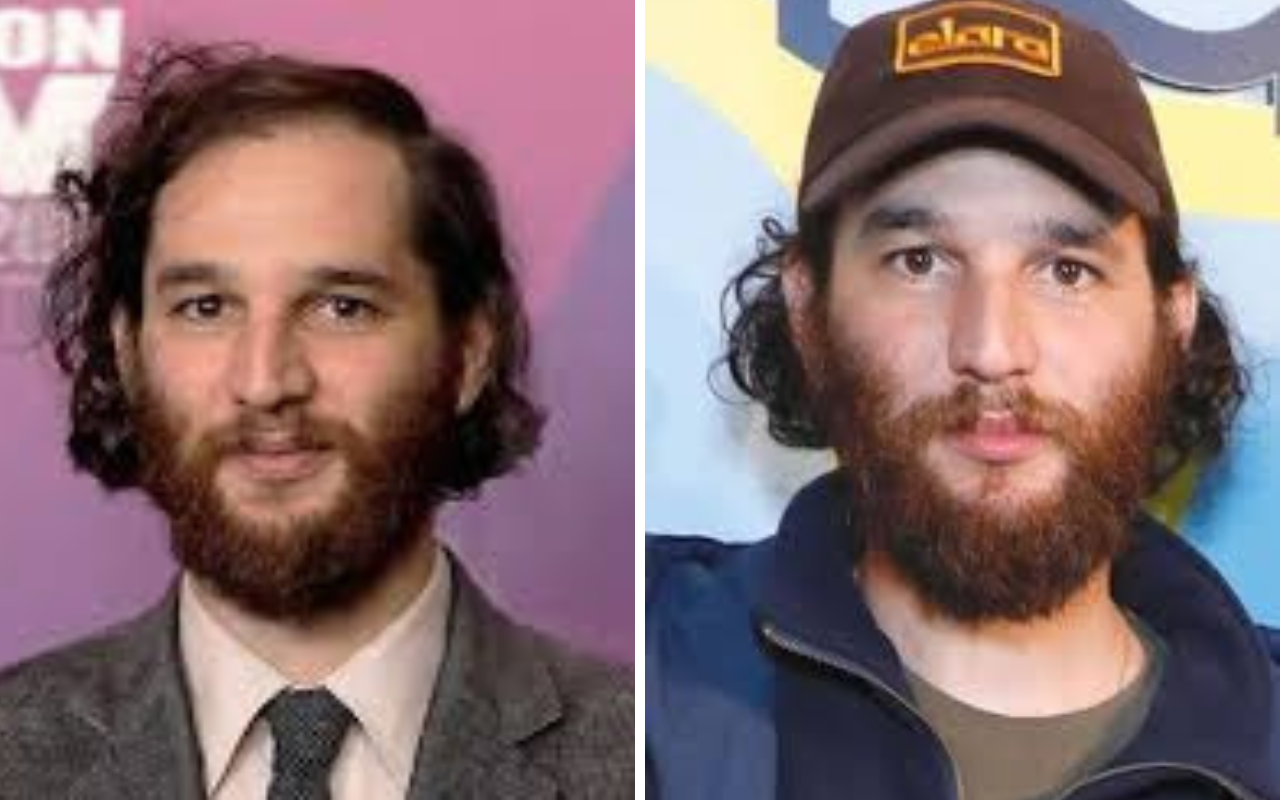
Josh Safdie: Chaos, Genius, and the Art of Cinematic Anxiety
n the landscape of modern American cinema, few directors generate a physical reaction quite like Josh Safdie. To watch a film directed by Josh Safdie is not merely to observe a story; it is to endure a sensation—a relentless, almost unbearable pressure that builds in your chest until the credits finally offer a cathartic release. Known for a distinct brand of raw, kinetic filmmaking, he has carved out a space where high art meets grimy street-level realism. Whether chronicling a jeweler’s manic gambles or a ping-pong prodigy’s obsessive rise, Safdie has become synonymous with characters who operate on the edge of self-destruction. This article unpacks the career, the style, and the singular philosophy of the filmmaker who turned anxiety into an art form.
The Queens Origin Story
Born in 1984 in New York City and raised between the vibrant boroughs of Queens and Manhattan, Josh Safdie was immersed in the texture of the city from a very young age. Growing up in a Jewish household with Syrian and Russian roots, his worldview was shaped by the chaotic, high-stakes energy of urban life . His father, an obsessive creator of home movies, served as an early inspiration, demonstrating that capturing reality through a lens was a valid form of expression . This early exposure to the “do-it-yourself” spirit of New York would later define the guerrilla filmmaking tactics that became a signature of his work.
The Partnership with Benny Safdie
For nearly two decades, the name Josh Safdie was inseparable from that of his younger brother, Benny. As the Safdie brothers, they formed a symbiotic filmmaking unit that dominated the independent film scene. While Josh often acted as the primary driving force and visionary on set, Benny served as a steadying creative partner and frequent actor . Together, they built Elara Pictures and produced a body of work defined by overlapping dialogue, vérité aesthetics, and protagonists who are impossible to look away from, even as they make terrible decisions. Their partnership produced modern classics that redefined the New York crime drama for a new generation.
The Early Works: Capturing Raw Reality
Before the mainstream success, Josh Safdie was honing his specific voice in the underground. His debut feature, Daddy Longlegs (2009), which premiered at Cannes, offered a semi-autobiographical look at a flawed yet loving father—played by Ronald Bronstein—over two weeks of chaotic custody . It established a recurring theme for Safdie: the profound empathy for people who are bad at being good. The 2014 breakthrough Heaven Knows What followed a young heroin addict named Harley, played by non-professional actor Arielle Holmes. In a move that defines his career, Safdie discovered Holmes on the streets and adapted her life story into a devastating, trance-like portrait of addiction . This film won the Tokyo Grand Prix, announcing to the world that a major new talent had arrived .
Good Time and the Pulse of a Desperate Night
The 2017 film Good Time marked a pivotal turning point, pushing Josh Safdie and his brother into the mainstream spotlight. Starring a peroxide-blond Robert Pattinson as a charismatic bank robber named Connie, the film unfolds over a single, sleepless night in Queens. The movie is a relentless sensory assault—neon lights blurring against the dark, a thumping score by Daniel Lopatin (Oneohtrix Point Never), and a camera that refuses to stop moving . It proved that Safdie could manufacture tension with the precision of a master watchmaker, trapping the audience inside the protagonist’s desperate psychology as his plans unravel in real-time.
Uncut Gems: A Masterpiece of Masochistic Suspense
In 2019, Josh Safdie and Benny Safdie delivered their magnum opus to that point: Uncut Gems. Casting Adam Sandler against type as Howard Ratner, a fast-talking jeweler with a gambling addiction, was a stroke of genius that revitalized Sandler’s dramatic credibility . The film follows Howard’s frantic efforts to repay debts after procuring a rare, uncut Ethiopian opal. It is a controlled detonation of organized chaos—anxiety as entertainment. The Safdies utilized overlapping dialogue, persistent motion, and a visceral sound design to mimic the highs and lows of addiction. Uncut Gems earned the National Board of Review award for Best Original Script and solidified Josh Safdie’s reputation as a director capable of extracting once-in-a-career performances .
“Happiness is a very sad thing, which is a strange thing to say. It’s so haunted and fleeting.” – Josh Safdie
Marty Supreme: The Solo Era Begins
After a creative split from his brother Benny, who pursued acting and his own directing projects, Josh Safdie stepped into the solo spotlight with Marty Supreme (2025). The film, a fictionalized account inspired by real-life table tennis hustler Marty Reisman, marks a significant evolution for Josh Safdie as an isolated force . Starring Timothée Chalamet in an Oscar-nominated role, the film follows a 1950s ping-pong prodigy navigating a surreal, high-stakes world of hustling. Critics noted that while Marty Supreme retained the kinetic energy of his previous work, it introduced a looser, stranger, and more psychedelic tone, proving that Safdie’s voice did not rely on his brother’s presence to remain compelling .
The Safdie Split: Creative Divergence
The announcement that the Safdie brothers would separate to direct their own films sent shockwaves through the industry. Benny took on The Smashing Machine with Dwayne Johnson, while Josh produced Marty Supreme. While rumors swirled about on-set tensions dating back to Good Time, the split appears to be a natural evolution of two strong-willed artists . For Josh Safdie, the separation allowed him to lean further into a more abstract, performance-driven style. While Benny’s work tends toward the classical and muscular, Josh continues to chase the “frequency” of transcendence in performance, pushing actors into vulnerable, unguarded territories that blur the line between character and self.
The Philosophy of the Container
To understand Josh Safdie, one must understand his unique language with actors. He speaks of creating a “container”—a structured environment of rehearsal and shared history that allows for spontaneous combustion . He rejects traditional blocking in favor of throwing stimuli at performers to catch them “off guard.” A famous example from Marty Supreme involves Tyler, the Creator pushing Chalamet unexpectedly during a take, resulting in a moment of genuine shock and humility that Safdie kept in the final cut. For Josh Safdie, the script is the map, but the performance is the uncharted territory. He believes in psychoanalysis, early childhood trauma, and developing a robust internal monologue for every character so that the actor can “transcend.”
Stylistic Signatures in the Safdie Universe
A film directed by Josh Safdie arrives with immediate visual and auditory trademarks. Below is a breakdown of the elements that define his distinct aesthetic.
Casting as Alchemy
One of the most discussed aspects of Josh Safdie’s process is his uncanny ability to cast non-actors in pivotal roles. He does not simply cast “faces”; he casts lived-in energy. For Heaven Knows What, he found Arielle Holmes panhandling and built a movie around her. For Uncut Gems, he populated the background with real Diamond District hustlers. This methodology extends to his celebrity casting as well. He saw an “untapped” intensity in Timothée Chalamet—a “pathologized dreamer”—that other directors had ignored . Josh Safdie possesses a radar for recognizing authenticity, often preferring the unpredictable nature of a real person over the technical precision of a trained actor.
The Role of Time and Anxiety
In the world of Josh Safdie, time is the enemy. His films almost always take place in compressed timelines—one crazy night, a frantic week, a ticking clock until the basketball bet cashes. He is fascinated by the Einsteinian relativity of time, where minutes feel like hours when you are suffering, and hours feel like seconds when you are chasing the dragon . His work explores how humans react when the clock is their adversary. The anxiety is not accidental; it is the point. He wants the audience to feel the “hand on the hot stove” so that they viscerally understand the addiction to the “high.”
Commercial Work and Future Ventures
Demonstrating his versatility, Josh Safdie signed with Superprime Films in 2025 for commercial representation, joining an elite roster that includes Martin Scorsese and Chloé Zhao . This move signals a desire to apply his intense, narrative-driven eye to branded content, bringing his signature vérité style to shorter formats. However, his primary focus remains the feature film. Following the Oscar buzz for Marty Supreme, which garnered nominations for Best Picture and Best Director, the industry is watching closely to see what Josh Safdie does next . His trajectory suggests he will continue to push actors to their limits and audiences to the edge of their seats.
Influence on Contemporary Cinema
Josh Safdie has irreversibly changed the vocabulary of American independent film. Before Good Time, the anxiety-driven thriller was often viewed as a genre exercise. Safdie elevated it to high art. He proved that a film could be both a relentless gut-punch and a deeply humanist character study. His influence is visible in a wave of younger filmmakers who prioritize texture and emotional urgency over plot mechanics. By refusing to judge his characters, even as they lie, steal, and cheat, Josh Safdie upholds a tradition of cinema that finds grace in the gutter.
Debating the Morality of His Characters
A common entry point for critics discussing Josh Safdie is the “likeability” of his protagonists. Howard Ratner is a philanderer and a gambling addict. Connie in Good Time is a manipulator who drags a cognitively impaired brother into danger. Yet, audiences root for them. Safdie achieves this not by softening their edges, but by exposing their vulnerability. He shows the desperation behind the con. This refusal to sand down the rough edges of humanity is a hallmark of his work. He asks the audience to look at the worst version of a person and find the sliver of hope that keeps them running.
Conclusion
From the grainy streets of Heaven Knows What to the glitzy chaos of Uncut Gems and the surreal ping-pong palaces of Marty Supreme, Josh Safdie has built a career on disruption. He is a director who channels the specific frequency of New York City—its noise, its rhythm, its desperation, and its dreams. Whether working with his brother or flying solo, his artistic fingerprint remains unmistakable: high tension, immersive soundscapes, and a profound love for the scoundrels trying to beat the system. As he moves into the next phase of his career, one thing is certain: watching a film by Josh Safdie will never be a passive experience. It will grab you by the collar and refuse to let go.
Frequently Asked Questions
What is Josh Safdie best known for?
Josh Safdie is best known for co-directing the anxiety-driven crime thrillers Uncut Gems (2019) starring Adam Sandler and Good Time (2017) starring Robert Pattinson, as well as directing the solo feature Marty Supreme (2025).
Is Josh Safdie still working with his brother Benny?
The Safdie brothers announced a creative separation in 2024 to pursue solo directing projects. While they remain collaborators under their Elara Pictures banner, Josh directed Marty Supreme alone while Benny directed The Smashing Machine.
What is the Safdie brothers’ movie style?
Their signature style, heavily driven by Josh Safdie’s vision, involves jittery handheld camerawork, overlapping dialogue, protagonists with compulsive personalities, and electronic scores that generate intense, claustrophobic suspense.
Where did Josh Safdie grow up?
Josh Safdie was born in New York City in 1984 and grew up between the boroughs of Queens and Manhattan. He is of Syrian and Russian Jewish descent and graduated from Boston University’s College of Communication .
ReadMode; Stephanie Thirkill: The Strategic Visionary Redefining Leadership in Finance & Sport
Did Josh Safdie direct Marty Supreme?
Yes, Josh Safdie directed, co-wrote, and edited Marty Supreme. The film stars Timothée Chalamet as a 1950s ping-pong hustler and earned Josh Safdie multiple Oscar nominations, including Best Director .