





Here is a comprehensive, long-form SEO article about “Aksara Bali,” built to enterprise content standards.
Aksara Bali: More Than an Alphabet, It‘s the Island’s Living Soul
In the heart of Bali, where the scent of incense drifts through temple courtyards and the sound of ocean waves meets the gamelan’s gentle chime, there exists a script of profound beauty. It curls and flows on dried palm leaves, stands carved in stone monuments, and adorns village entryways. This is Aksara Bali—the traditional Balinese script. To the untrained eye,
it appears as an intricate collection of curves and dots; to the Balinese people, it is far more. It is a vessel for ancestral wisdom, a tool for spiritual connection, and a defiant symbol of identity in a rapidly modernizing world. Understanding Aksara Bali is not just about learning to read syllables; it is about unlocking the philosophical core of a culture that has preserved its heritage for over a millennium.
While the Latin alphabet dominates digital screens and government documents across Indonesia, Aksara Bali persists. It thrives in the sacred space of the lontar (palm-leaf manuscript), in the intricate offerings prepared by devotees, and in the signage that declares Balinese cultural sovereignty. This article delves deep into the script’s history, its intricate structure, its sacred classifications, and the modern movement to ensure its survival. We will explore why, despite being classified as an endangered script by some standards, its flame is being fiercely guarded by a new generation determined to keep the legacy alive.
The Sacred Origins and Ancient History of Aksara Bali
The story of Aksara Bali is a story of migration, adaptation, and sacred mythology. Its roots dig deep into the fertile soil of ancient India, tracing a path that changed the face of Southeast Asia. The script is a proud member of the Brahmic family, a vast lineage of writing systems that descend from the Brahmi script of ancient India. This lineage connects Bali to a vast
swath of the world, from the Tibetan plateau to the islands of the Philippines. Specifically, Aksara Bali is a direct descendant of the Pallava script, which held sway over large parts of South India and Southeast Asia during the first millennium CE. As Hindu and Buddhist influences spread across the archipelago via trade routes and royal courts, so too did the technology of writing .
This early script evolved and adapted, giving rise to the Kawi script (also known as Old Javanese), which became the lingua franca for religious and literary expression across Java and Bali for centuries. The earliest tangible evidence of this script in Bali is nothing short of spectacular. The Blanjong Pillar (Prasasti Blanjong), located in Sanur, stands as a silent witness to this ancient past.
Dated to 914 CE, this stone pillar bears inscriptions in both Sanskrit and Old Balinese, utilizing two scripts: the Nagari script and an early form of Aksara Bali. This artifact marks the dawn of the island’s recorded history and provides irrefutable proof that a sophisticated literary culture existed in Bali over 1,100 years ago . From these stone beginnings, the script evolved, its curves softening over centuries of scribes scratching its forms onto the delicate ribs of palm leaves.
More Than Letters: The Philosophical Meaning of Aksara
To truly appreciate Aksara Bali, one must move beyond the linguistic definition and embrace its philosophical weight. The word aksara itself is a concept of immense depth. Derived from Sanskrit, it is a compound of the prefix a-, meaning “not,” and ksara, meaning “destroyable” or “perishable.” Therefore, aksara literally translates to “that which is imperishable” or “the eternal.” This is not a casual label; it reflects the ancient belief that through written language, knowledge, truth, and prayer transcend the mortality of the individual. The words inscribed become immortal, passing wisdom from one generation to the next, defying the erosion of time .
In Balinese culture, the reverence for the written word is so profound that it intertwines with the spiritual identity of the people. The term “Aksara Bali” is often used interchangeably with “Sastra” in local context, a word that originally meant “command” or “sacred rule,” later evolving to mean “sacred text” or “knowledge itself” . This connection is vividly alive today in the
celebration of Hari Raya Saraswati, the day of knowledge dedicated to the goddess of learning, arts, and wisdom. On this day, books and manuscripts—containing both the Latin and Balinese scripts—are blessed. Lontars, the traditional palm-leaf books, are taken out, cleaned, and venerated. It is a powerful, tangible acknowledgment that these symbols are not mere ink but are vessels for the divine, deserving of respect and devotion .
The Hanacaraka Sequence: A Tale of Two Servants
Learning any new script requires a starting point, and for Aksara Bali, that entry point is the beloved Hanacaraka sequence. Just as we learn the ABCs, Balinese children traditionally begin their literacy journey by memorizing this specific order of the basic consonants. The sequence consists of 18 core characters: Ha, Na, Ca, Ra, Ka, Da, Ta, Sa, Wa, La, Ma, Ga, Ba, Nga, Pa, Ja, Ya, Nya .
What makes this learning tool so unique and culturally rich is that these 18 syllables, when strung together, form a profound pangram—a sentence that contains every letter. The sequence tells the legendary story of Aji Saka, a Javanese king credited with bringing civilization and writing to the island. The verses can be interpreted as:
- Hana caraka: “There were (two) emissaries”
- Data sawala: “They began to fight”
- Padha jayanya: “Their valor was equal”
- Maga bathanga: “They both fell dead”
This elegant mnemonic device does more than just teach the alphabet; it embeds a moral lesson about conflict, respect, and mortality into the very fabric of writing. Each time a scribe or student writes the sequence, they are not just reciting letters; they are retelling a foundational myth, a practice that connects them to generations of learners before them.
Classifying the Script: Wreastra, Swalalita, and Modre
Not all Aksara Bali is created equal. The script system is brilliantly stratified, with different sets of characters designated for different purposes. Understanding these classifications is key to grasping how the Balinese have historically navigated different layers of language, from the colloquial to the divine. The government of Bali province and cultural authorities break down the usage into three primary categories, a system that reflects the deep intellectual and spiritual sophistication of the culture .
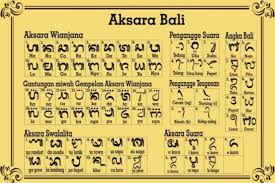
Aksara Wreastra forms the foundation. These are the 18 basic consonants you find in the Hanacaraka sequence. As the name implies, these are the “ordinary” letters used for writing everyday Balinese. If someone were jotting down a note, composing a modern story, or penning a personal letter in the Balinese language, they would primarily rely on the Wreastra set .
Aksara Swalalita represents a step up in linguistic register. This set includes additional consonants used specifically for writing loanwords and texts in Sanskrit and Old Javanese (Kawi). You will encounter these characters in literary works like kakawin (traditional poems) and kidung (religious songs). The Swalalita characters allow for the accurate transliteration of sounds that exist in these ancient, sacred languages but are not present in everyday Balinese speech .
Finally, there is Aksara Modre. This is perhaps the most fascinating and esoteric category. These are sacred, “magical” characters that are not used for mundane writing. Instead, they are imbued with spiritual power. Aksara Modre appear on protective talismans, in religious manuscripts, and in drawings meant to represent deities or cosmic forces. They are considered a conduit for divine energy, used in meditation and mantra to connect with the spiritual realm. Their use is often restricted to those with the appropriate spiritual knowledge, underscoring the belief that writing can be a direct line to the gods .
The Building Blocks of an Abugida
For those accustomed to alphabets like the Latin one, the mechanics of Aksara Bali can be a fascinating puzzle. It is an abugida, a writing system where each consonant letter inherently carries a vowel. In this case, every basic consonant, or Aksara Wianjana, is pronounced with the inherent vowel /a/. For example, the character for “b” is written and pronounced as “ba.” To change this vowel, the letter must be adorned with diacritics, known locally as pangangge .
Think of it like dressing a letter. The base consonant is the person, and the pangangge are the clothes they wear to change their appearance. There are three main types of pangangge: Pangangge Suara (vowel diacritics) which change the vowel sound (e.g., turning “na” into “ni,” “nu,” or “ne”); Pangangge Ardhasuara (semi-vowel diacritics) which introduce y, r, or w sounds (e.g., turning “pa” into “pya” or “pra”); and Pangangge Tengenan which are final consonant markers, adding sounds like -ng, -r, or -h to the end of a syllable .
Furthermore, when two consonants appear together without a vowel between them (like the “kt” in “actor”), the first consonant is “killed” using a special mark called an adeg-adeg, and the second consonant is transformed into a dependent form called a gantungan. These gantungan hang below the first consonant, creating the stacked, vertical appearance that makes the script so visually distinctive .
Detailed Table: The Core Consonants of Aksara Bali (Wreastra)
To help visualize the foundation of the script, the table below outlines the 18 core consonants of the Hanacaraka sequence, their pronunciation, and their role. This is the essential toolkit for anyone beginning to explore Aksara Bali .
| Character (Aksara) | Romanization | IPA | Name / Notes |
|---|---|---|---|
| ᬳ | Ha | [ha] | Often silent at the beginning of words (e.g., hujan is pronounced ujan). |
| ᬦ | Na | [na] | Core consonant, used frequently in everyday vocabulary. |
| ᬘ | Ca | [tʃa] | Pronounced like the ‘ca’ in “catch.” |
| ᬭ | Ra | [ra] | A rolled ‘r’ sound. |
| ᬓ | Ka | [ka] | A hard ‘k’ sound. |
| ᬤ | Da | [d̪a] | A dental ‘d’ (tongue touches teeth). |
| ᬢ | Ta | [t̪a] | A dental ‘t’ (tongue touches teeth). |
| ᬲ | Sa | [sa] | A soft ‘s’ sound. |
| ᬯ | Wa | [wa] | A semivowel, like the ‘wa’ in “water.” |
| ᬮ | La | [l̪a] | A dental ‘l’. |
| ᬫ | Ma | [ma] | Standard ‘m’. |
| ᬕ | Ga | [ɡa] | Hard ‘g’ as in “go.” |
| ᬩ | Ba | [ba] | Standard ‘b’. |
| ᬗ | Nga | [ŋa] | The ‘ng’ sound in “singing.” |
| ᬧ | Pa | [pa] | Standard ‘p’. |
| ᬚ | Ja | [dʒa] | The ‘j’ sound in “jump.” |
| ᬬ | Ya | [ja] | The ‘y’ sound in “yes.” |
| ᬜ | Nya | [ɲa] | The ‘ñ’ sound in “canyon.” |
Guardians of the Script: Lontar and Traditional Media
The survival of Aksara Bali for over a millennium is inextricably linked to its primary medium: the lontar. A lontar is a manuscript made from the carefully prepared leaves of the tal palm tree (Borassus flabellifer). The process of creating a single, blank lontar is a labor of love and patience. Leaves are harvested, boiled in a herbal infusion to harden them, dried, pressed flat for weeks, and finally cut to size. Only then are they ready to receive the scribe’s stylus .
The act of writing on a lontar is itself an art form. A scribe uses a pangropak, a small, sharp knife, to scratch the characters into the leaf’s surface. Because of the resistance of the palm fiber and the nature of the tool, the resulting letters are filled with graceful curves and circles—a stylistic feature that defines Aksara Bali today . After the incising is complete, the leaf is rubbed with a mixture of lampblack and oil, which seeps into the scratches and makes the writing legible. These lontar collections, often wrapped in cloth or stored in wooden boxes, became the libraries of ancient Bali, containing everything from epic poetry and historical chronicles to medical treatises and astronomical charts.
Aksara Bali in the Modern World
Despite its deep roots, the 20th century brought significant challenges to the survival of Aksara Bali. The Japanese occupation during World War II saw the prohibition of many indigenous scripts. Later, after Indonesia’s independence, the new nation’s official language, Indonesian (Bahasa Indonesia), was promoted through education and governance, and it was written in the Latin alphabet. Within just two generations, daily use of the Balinese script plummeted, leading to a common local saying: malajah basa bali, macane takutin, which plays on the double meaning of “learning Balinese, we’re afraid of reading” and “learning Balinese, we’re afraid of the tiger.” The script had become a source of difficulty rather than pride for many young people .
However, the story does not end in decline. The modern era has witnessed a powerful cultural resurgence. Since around 2015, a wave of grassroots organizations—such as BASAbali, Aksara Di Nusantara, and the Hanacaraka Society—have emerged, dedicated to revitalizing the language
\and script. They use innovative tools like wikis, social media, and apps to make learning accessible and cool. In a landmark move, the Governor of Bali, Wayan Koster, issued a regulation requiring all public signs to be written in both Latin and Balinese script. While this led to some humorous translation errors from sign painters unfamiliar with the script, it signaled an unequivocal political commitment: Aksara Bali is not a relic of the past, but a required language of the present .
One of the most beautiful ways the script endures is through the Sekaha Pesantian, neighborhood reading groups. A participant once described these sessions as being “similar to the one in a karaoke room, everyone is eager to take turn reading.” In these groups, one person chants a line from a Kawi text, another translates it into Balinese, and a third explains the moral of the story. This communal act of reading, translating, and discussing keeps the literature alive and vibrant, ensuring the script is not just seen, but heard and understood .
“My father is a member of sekaha pesantian in our banjar. As a kid, I followed him [when he] went to the sekaha reading sessions. The situation was similar to the one in a karaoke room, everyone is eager to take turn reading… those sessions can take hours, even from dusk until dawn.” — Ida Bagus Adi Sudewa
Conclusion
Aksara Bali is far more than a historical curiosity or a collection of ornate symbols. It is a testament to the enduring power of cultural identity. From its origins in ancient Indian courts, through its evolution on the battlefields of myth and the quiet labor of lontar scribes, to its current revival in the digital age, the script has proven itself to be truly aksara—imperishable. It is the key that unlocks the island’s vast literary treasures, the brush with which artists paint spiritual protection, and the banner under which a modern movement for cultural sovereignty marches.
As Bali navigates the complexities of global tourism and modern development, the script remains its unique signature. To see Aksara Bali on a village sign, a government building, or a temple wall is to witness a culture confidently asserting its place in the world. The efforts of educators, artists, and the provincial government are ensuring that future generations of Balinese will not just be able to read this beautiful script, but will also understand the depth of wisdom and identity inscribed within every curve and dot.
Frequently Asked Questions about Aksara Bali
H3: What exactly is Aksara Bali?
Aksara Bali is the traditional script used to write the Balinese language, as well as Sanskrit and Old Javanese (Kawi). It is an abugida descended from the Brahmi script of ancient India, meaning each consonant has an inherent vowel /a/ that can be changed with diacritics. It is one of Indonesia’s most ornate and culturally significant writing systems .
H3: Is Aksara Bali the same as Javanese script?
They are “sister scripts” and very close relatives, both descending from the Kawi script. In historical handwritten documents, they are virtually identical. The modern differences in appearance are partly due to the influence of Dutch typefaces on the Javanese script in the 19th century, which led to a divergence in standardized printed forms .
H3: Why does Aksara Bali have such a rounded shape?
The distinctive rounded, bulbous shape of Aksara Bali is a direct result of its primary writing medium: the lontar palm leaf. Scribes used a sharp knife to scratch the letters into the fibrous surface of the leaf. Creating straight lines with this technique risks tearing the leaf, so the letters naturally evolved to consist of graceful curves and circles .
H3: Is the Balinese script still used today?
Yes, actively. While its everyday use has declined, it is experiencing a strong revival. It is used in religious ceremonies, written on lontar manuscripts, and featured prominently on public signage across Bali following a 2018 government regulation. It is also taught in schools as part of local curriculum, and numerous community groups work to promote its use .
H3: How can I learn to read or write Aksara Bali?
There are growing resources available. The BASAbali organization offers an excellent online wiki and dictionary. Websites like babadbali.com provide detailed lessons on the alphabet. Additionally, for those visiting or living in Bali, many cultural centers and universities offer short courses or workshops in reading and writing Aksara Bali, often focusing on the traditional lontar medium.