





Here is a comprehensive, long-form SEO article about the Iranian rial, built according to your enterprise-level content strategy standards.
SEO Title: Iranian Rial Collapse 2026: Why It’s Crashing and What Comes Next
Meta Description: An in-depth look at the Iranian rial‘s record fall to 1.6M per USD. We analyze the causes—sanctions, inflation, war fears—and what it means for Iranians and global markets.
Iranian Rial
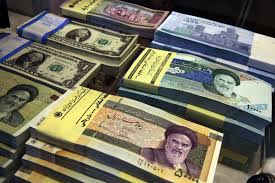
The Iranian rial is in the midst of the most severe crisis of its tumultuous history. In the opening weeks of 2026, the currency has effectively collapsed, shattering record lows with a velocity that has stunned economists and citizens alike. What was once a medium of exchange has become a symbol of the nation’s profound economic and geopolitical struggles, with the exchange rate recently touching a staggering 1.65 million rials against the US dollar . This isn’t merely a fluctuation; it is a freefall that has erased purchasing power, ignited social unrest, and placed the Islamic Republic at a critical juncture.
Understanding the collapse of the Iranian rial requires looking beyond simple supply and demand. It is a story where international politics, domestic mismanagement, and deep-seated structural flaws converge. The currency’s nosedive acts as a barometer for the pressure exerted by renewed “maximum pressure” campaigns, the internal battles against inflation and corruption, and the daily struggle of millions to afford bread and medicine. This article dissects the anatomy of this collapse, exploring its roots, its human cost, and the uncertain path that lies ahead for one of the Middle East’s most consequential economies.
The Historical Precedent: From 70 Rials to 1.6 Million
To grasp the magnitude of the current crisis, one must look back just fifty years. In the early 1970s, the Iranian rial was a stable and respectable currency, with the US dollar buying roughly 70 rials. At the time of the 1979 Islamic Revolution, that rate had held relatively steady, positioning Iran as an economic powerhouse in the region . The intervening decades, however, have witnessed an erosion of value so profound that it represents one of the longest and deepest currency depreciations in modern history.
The journey from 70 to over 1.6 million rials per dollar has been marked by periods of relative calm punctuated by devastating drops . Each major geopolitical event—the Iran-Iraq war, cycles of sanctions, and the constant specter of conflict—has left an indelible mark on the currency’s value. This isn’t just a statistic; it represents the evaporation of life savings, pensions, and economic security for generations of Iranians, transforming a once-proud national symbol into a source of daily anxiety and financial precarity .
The Perfect Storm: External Sanctions and Internal Pressures
The Weight of Maximum Pressure
The immediate catalyst for the rial’s latest, most dangerous plunge can be traced directly to the geopolitical arena. The re-imposition of “snapback” sanctions by the United Nations in late 2025, following the expiration of nuclear deal provisions, effectively severed the Iranian economy from the global financial system . This move, coupled with the Trump administration’s renewed “maximum pressure” campaign, specifically targeted the lifeblood of the Iranian state: its oil revenue. By intercepting tankers and sanctioning any entity involved in Iranian crude sales, the US aimed to choke off the flow of hard currency into the country .
Without access to its foreign reserves and unable to repatriate oil dollars, the Central Bank of Iran lost its primary tool for defending the rial: the ability to inject US dollars into the market to meet demand. The announcement of secondary tariffs on countries trading with Iran further isolated the economy, scaring off potential partners and leaving the rial to the mercy of market forces . As one economist noted, “When a government can’t sell dollars to defend its own currency, the exchange rate goes vertical” .
The Structural Cracks Beneath the Surface
While external sanctions are the most visible culprit, they act upon a foundation riddled with structural weaknesses. Iran’s economy suffers from a critical dependency on oil, which accounts for the vast majority of its foreign revenue. This single-commodity reliance creates an inherent vulnerability; when oil exports are blocked, the bottom falls out of the currency . To make matters worse, chronic fiscal deficits have led the government to repeatedly rely on money printing to cover its expenses, including significant regional military commitments .
Compounding these issues is the infamous “multi-tier” exchange rate system. Designed to subsidize essentials like food and medicine with a far lower official rate (historically 42,000 rials to the dollar), the system instead became a breeding ground for corruption and arbitrage . Those with connections could secure dollars at the subsidized rate and sell them on the open market for a massive profit. The recent government attempt to unify these rates—by eliminating the subsidized rate for many goods—backfired spectacularly, pushing importers to the open market and causing a demand shock that decimated the currency overnight .
When Money Loses Meaning: The Human Toll
The Arithmetic of Poverty
Behind the macroeconomic headlines are the stark realities of daily life in Iran, where the rial’s collapse is measured not in pips but in empty shopping carts. The inflation rate, officially hovering above 40%, tells only part of the story. Food prices, the most critical metric for the average family, have skyrocketed by as much as 72% in the past year . A kilo of red meat that cost 13 million rials a month ago now sells for 22 million rials, a price increase that defies the stagnant salaries of public servants and laborers .
The working class is being systematically crushed. A taxi driver and his wife, earning a combined 600 million rials a month, find themselves unable to keep pace with the doubling cost of milk and pasta . People are forced to shop at night in hopes of finding half-price produce that is about to spoil. As one retired civil servant put it, “Everybody is under pressure: merchants, civil servants, laborers. The weaker class of people is being crushed” . The currency has stopped being a store of value and has become a source of relentless, grinding poverty.
The Bazaar Stops and Society Erupts
The economic pain has inevitably spilled into the streets, shattering the social contract. The protests that began in late 2025 in Tehran’s Grand Bazaar were particularly significant. The bazaari merchants have historically been a pillar of the state, but their decision to shutter their shops and join the demonstrations signaled a tipping point . This was no longer just the frustration of the poor; it was the economic engine of the nation grinding to a halt. The government’s attempt to mollify the public with a meager monthly stipend of 10 million rials (about $7) was widely seen as an insult, especially given the state’s continued funding of foreign allies .
The crisis has even disrupted access to healthcare, transforming treatable conditions into lifelong burdens. The story of Ali Akbar, a man in Tehran who had to stop his immunotherapy treatment because the price tripled in a matter of months, is a harrowing example of how currency collapse translates directly into human suffering . When the currency becomes worthless, so too does the ability to secure the most basic necessities of life, from eggs to essential medicines.
The BRICS Conundrum and a “Zero” Value
A Test of Global Solidarity
Iran’s formal admission into the BRICS bloc (Brazil, Russia, India, China, South Africa) in 2024 was hailed as a strategic triumph, a move that would reduce its isolation and facilitate trade in currencies other than the US dollar. The rial’s collapse, however, has put this new alliance to a severe stress test. The United States has actively worked to exploit Iran’s vulnerability, using the threat of secondary sanctions to deter BRICS nations from deepening economic ties . For India and China, major trading partners, the risk of falling afoul of US penalties often outweighs the benefits of solidarity with Tehran.
The situation has exposed the limits of de-dollarization rhetoric. While the “Global South” speaks of multipolarity, the practical realities of global finance, dominated by the dollar, remain a powerful force. As one analyst observed, the crisis forces BRICS partners to choose “between talk of multipolar solidarity and their much larger trade relationships with the West” . The rial’s fate is now partially tied to whether Russia and China are willing and able to provide a meaningful economic lifeline.
The Symbolism of Zero
In a moment of profound symbolism, some international currency conversion platforms began displaying the Iranian rial’s value against the US dollar as effectively “$0.00” . While technically a rounding error—the systems weren’t designed to handle exchange rates requiring six or seven decimal places—the visual was a stark metaphor for reality. It was a digital manifestation of the complete evaporation of confidence in the national currency.
Economists are careful to clarify that the rial hasn’t technically become “worthless,” but its functional value has dropped so low that it challenges the very definition of money. Money is supposed to serve as a store of value, a unit of account, and a medium of exchange. In Iran today, it fails on all counts. The “zero value” displayed on screens captures the sentiment of a population that has lost faith, scrambling to convert their earnings into gold, foreign currency, or tangible assets the moment they are paid .
Will the Rial Survive? The Future of Iran’s Currency
Monetary Surgery: The Toman Redenomination
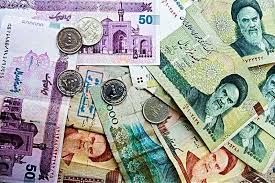
For years, Iranian officials have discussed a radical solution to the rial’s woes: dropping several zeros and renaming the currency. A plan formally approved by parliament aims to replace the rial with the toman, a historical unit of account still used informally in daily transactions . Under the proposal, one new toman would be equal to 10,000 old rials, effectively slashing four zeros from the currency .
Proponents argue this would simplify financial transactions and accounting, which currently require handling stacks of near-worthless banknotes. However, experts universally agree that redenomination is merely cosmetic. As one professor noted, “Eliminating zeros is only beneficial when the factors feeding national economic degeneration are also eliminated” . Without addressing the root causes—sanctions, oil dependence, and fiscal mismanagement—simply renaming the currency would be like painting over rust. It would create a “new” toman that would likely follow the same devastating path as the old rial.
The Long Road to Stability
The future trajectory of Iran’s currency hinges on factors far beyond the control of its central bank. The most immediate variable is the threat of outright military conflict with the United States and Israel. The mere fear of strikes has already accelerated capital flight and pushed the dollar to new highs . In such an environment, economic fundamentals take a backseat to survival instincts.
In the medium term, stabilization requires a combination of sustained disinflation, a credible fiscal policy, and, most critically, a relaxation of the sanctions regime. Until Iran can reliably sell its oil and repatriate the earnings, the supply of hard currency will remain insufficient to meet demand . For the rial to find a floor, the public must believe that the government has a plan to halt the money-printing presses and that there is a viable economic future. Until that confidence is restored, the currency will remain a casualty of a nation in crisis.
| Metric | 1979 (Revolution) | 2015 (Nuclear Deal) | Jan 2026 (Peak Crisis) |
|---|---|---|---|
| Exchange Rate (USD/IRR) | ~70 | ~32,000 | ~1,600,000 |
| Annual Inflation Rate | ~10% | ~15% | >46% |
| Key Economic Context | Stable, pre-revolutionary economy | Post-sanctions relief, hope for growth | “Maximum pressure,” war fears, internal unrest |
| Currency Regime | Relatively stable, managed rate | Multi-tier system formalized | Multi-tier system collapsing, near-unified freefall |
Conclusion
The Iranian rial is more than a currency in crisis; it is the central character in a national tragedy of economic mismanagement and geopolitical strife. Its collapse to historic lows against the dollar is a direct line tracing the failures of policy, the weight of international sanctions, and the immense human cost borne by the Iranian people. From the bustling bazaars of Tehran to the kitchen tables of families struggling to buy bread, the currency’s decline has redefined daily life, turning basic necessities into luxuries and savings into dust.
Looking forward, the fate of the rial remains uncertain, tethered to the whims of international diplomacy and the threat of war. The proposed switch to the toman may simplify numbers, but it will do nothing to solve the underlying equation. True recovery will require a resolution far more complex than a currency reform: it demands a fundamental shift in economic strategy and a political willingness to address the deep-seated issues that have left the nation’s currency, and its people, exposed and vulnerable.
Frequently Asked Questions
H3: Why is the Iranian rial collapsing so quickly?
The rapid collapse is due to a “perfect storm” of external and internal factors. Externally, renewed and intensified US sanctions have crippled oil exports, cutting off the primary source of foreign currency . Internally, the government has resorted to printing money to cover budget deficits, fueling massive inflation and eroding public confidence in the rial .
H3: What is the difference between the rial and the toman?
The toman is an informal unit of measurement widely used by Iranians in daily conversation. One toman is equal to 10 rials. For example, if an item costs 50,000 rials, a person would say it costs 5,000 tomans. The government has approved a plan to officially replace the rial with the toman to simplify transactions .
H3: How does a multi-tiered exchange rate work in Iran?
Iran has multiple exchange rates for the rial, including a subsidized official rate for essential imports like food and medicine, and a free-market rate for everything else. This system was intended to protect consumers but has led to corruption, where those with access to the subsidized rate profit from the huge gap with the market rate .
H3: What does a currency collapse mean for ordinary Iranians?
For ordinary Iranians, the collapse means a devastating loss of purchasing power. Inflation has made basic staples like meat, chicken, and even eggs unaffordable for many . Savings held in rials are wiped out, and people struggle to afford medicine and healthcare, pushing millions into poverty .
H3: Can the Iranian government fix the rial’s value?
Stabilizing the rial is extremely difficult under current conditions. To do so, the government needs a reliable and large supply of foreign currency (like US dollars) to meet market demand, which requires selling oil freely. As long as sanctions block oil revenue and internal policies fuel inflation, the central bank has limited power to stop the rial’s fall .