





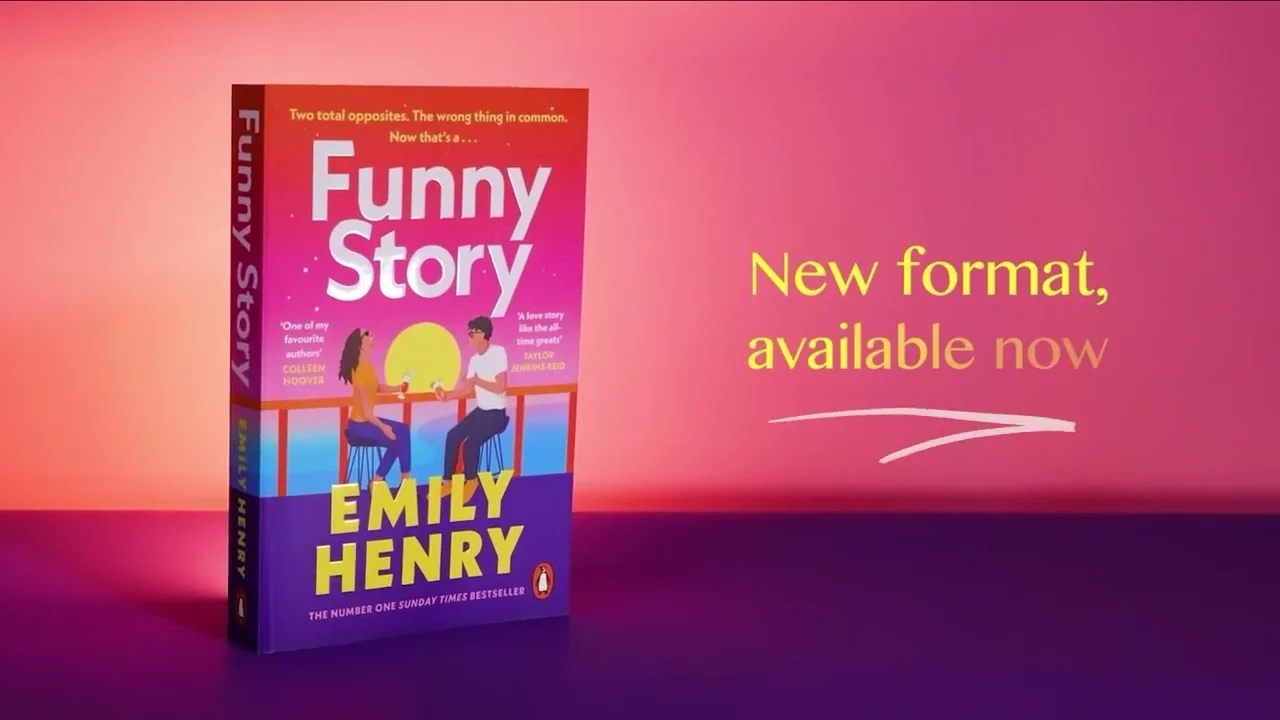
The Heart and Humor of Emily Henry’s “Funny Story”: A Deep Dive
For hundreds of thousands of readers, Emily Henry’s “Funny Story” has become more than just a bestselling romance novel. It’s a vibrant, emotional exploration of what happens when life’s most painful plot twists lead you to a love story you never saw coming. This novel, which debuted at number one on The New York Times bestseller list and has sold over 800,000 copies, masterfully blends laugh-out-loud humor with profound insights about healing, friendship, and the quiet moments that truly build a life. Join us as we unpack the magic behind this shimmering, joyful novel.
The Unlikely Setup: When Your Worst Nightmare Leads to a New Beginning
At its core, “Funny Story” begins with a premise ripe for both comedy and heartache. Daphne Vincent is a pragmatic children’s librarian who has uprooted her life for her fiancé, Peter, only to be abruptly left for his childhood best friend, Petra. Stranded in the beautiful but unfamiliar Waning Bay, Michigan, Daphne’s solution is as desperate as it is logical: move in with Petra’s ex, Miles Nowak.Funny Story This premise—two strangers bonded by mutual betrayal—sets the stage for a story that is less about the drama of the exes and more about the quiet, tentative connection that forms in the wreckage.
Henry expertly uses this awkward roommate scenario to explore the early stages of grief and resilience. Daphne and Miles aren’t instantly drawn to each other; they are two wounded people politely tiptoeing around a shared space, one soothed by break-up ballads and the other so buttoned-up her coworkers suspect she’s in witness protection. Their initial dynamic avoids cliché, focusing instead on the realism of two adults trying to navigate profound embarrassment and hurt. The brilliance of this funny story setup is that it takes a situation that feels uniquely humiliating and universalizes it, allowing readers to see the potential for a new beginning where they might only see an ending.
Character Alchemy: The Dichotomy of Daphne and Miles
Daphne and Miles serve as perfect narrative foils, and their contrasts are the engine of the novel’s charm. Daphne is orderly, cautious, and carries the deep-seated fear of abandonment instilled by a flaky father. Miles, in contrast, is outwardly chaotic and scruffy, with a habit of absorbing other people’s problems to avoid his own. Henry doesn’t use these differences for mere comedic effect but rather to show how opposites can create a balanced whole. Daphne’s practicality grounds Miles, while his spontaneity helps Daphne rediscover joy and adventure.
Their personal journeys are about more than finding love; they are about confronting the parts of themselves that led to their previous unhealthy relationships. Daphne must learn to build a life and identity that isn’t dependent on a partner, a journey powerfully symbolized by her dedication to her library’s Read-a-Thon. Miles must face his tendency to panic and flee when emotions become too real. Their growth is individual yet parallel, making their eventual connection feel earned. As one reviewer insightfully noted about Henry’s characters, “you actually do feel for them, overlapped with such realistic qualities and problems that makes you relate to them”.
The Evolution from Plot Device to Authentic Bond
The novel employs the popular “fake dating” trope, but with Henry’s signature grounded twist. The plan is born not from a grand scheme, but from a tipsy, defensive moment where Daphne lies to Peter about dating Miles. What follows is a series of deliberately misleading social media posts and summer adventures meant to provoke their exes. However, Henry is less interested in the hijinks of the deception than in the authentic friendship that blossoms within it. Their fake dates—exploring Michigan’s wineries and hidden beaches—become real moments of vulnerability and discovery.
This slow-burn transition from roommates to friends to lovers is the heart of the funny story. The “pretend” relationship provides a safe container for two guarded people to be kind to each other without the immediate pressure of romance. Their banter, a highlight of the novel, evolves from strained politeness to a warm, teasing intimacy. Quotes like Miles saying, “Even when you try to be mean, you’re nice,” and Daphne replying, “I’ll try harder,” capture the gentle, evolving dynamic that readers adore. The fake relationship trope is deconstructed to reveal how sometimes, performing happiness can be a first step toward genuinely feeling it.
Beyond the Romance: The Foundational Power of Friendship
One of the standout themes in “Funny Story” is its heartfelt celebration of platonic love. Daphne’s developing friendship with her tough co-worker Ashleigh is given significant narrative weight. This relationship is crucial to Daphne’s arc, as it represents her building a support system independent of any romantic partner. Similarly, Miles’s tender relationship with his sister Julia provides deep insight into his character and their shared past. These friendships are not mere backdrops; they are active, dynamic relationships with their own conflicts and resolutions.
Henry has always woven strong threads of familial and friendship love into her romances. In an interview, she stated, “They’re always pitched as romances… but the love that actually is going on is more familial and friendship love and self-love. I’m fascinated by [love] endlessly”. This focus enriches the world of Waning Bay, making it feel lived-in and real. Daphne’s journey isn’t just about replacing a fiancé with a better boyfriend; it’s about constructing a full, multidimensional life where love comes in many forms. The repair of her rift with Ashleigh, for instance, is as emotionally satisfying as any romantic climax.
Thematic Depth: Confronting the Ghosts of Family and Fear
Beneath its sparkling rom-com surface, “Funny Story” tackles weighty themes of parental abandonment and the fear of not being enough. Daphne’s relationship with her unreliable father, Jason, is a central wound that echoes in her adult choices. Her fear that she is inherently leaveable is a direct result of his pattern of making and breaking promises. A pivotal moment of growth occurs not through romance, but when Daphne finally confronts this history, culminating in an angry, cathartic voicemail to her father.
Miles, too, is shaped by his family. He exhibits a “fixer” personality, always smoothing things over—a likely coping mechanism developed in a difficult childhood. His panic response to real emotional intimacy is a major obstacle he must overcome. The novel argues convincingly that to be ready for a healthy romantic future, one must first make peace with the past. This is not done through magical fixes but through difficult conversations, owned mistakes, and the brave decision to be vulnerable. The story suggests that our “funny story” of how we found love is often preceded by a harder, more private story of how we learned to love ourselves.
Henry’s Signature Storytelling: Prose, Pace, and “Poetic Smut”
Emily Henry’s writing style is a key ingredient in the novel’s success. Readers frequently praise her “engaging” prose that has them “fully immersed”. She has a gift for balancing laugh-out-loud observational humor with sentences of piercing emotional clarity. Her dialogue is particularly sparkling, feeling both natural and clever. The pace of the novel, while sometimes critiqued for having “some längen”, generally masterfully builds the relationship, allowing quiet moments of connection to resonate as powerfully as dramatic ones.
A notable point of discussion among fans is Henry’s approach to intimate scenes. One reviewer called the romance in “Funny Story” “the horniest Emily has ever been,” while also praising its balance and calling it “poetic smut”. These scenes are characterized not by gratuitous detail but by their emotional weight and focus on mutual vulnerability. They feel like a natural extension of the characters’ deepening bond, serving the story rather than distracting from it. This ability to write sensuality that is both hot and heartfelt is a hallmark of Henry’s work and a reason for her broad appeal.
The Verdict: Critical and Commercial Success
The reception for “Funny Story” has been overwhelmingly positive. It quickly achieved bestseller status and won the 2024 Goodreads Choice Award for Best Romance. Readers on platforms like Goodreads have given it strong ratings, with many calling it a favorite. However, Henry’s work also invites thoughtful critique. Some readers wished for more dramatic confrontation at the exes’ wedding or more page time for certain subplots. Others noted that while the characters are relatable, the plot’s central fake-dating device may feel familiar to seasoned romance readers.
Despite these minor critiques, the consensus is that Henry delivers exactly what her audience craves: intelligent, character-driven stories that are both an escape and a mirror. The novel’s success solidified Henry’s position as a defining voice in contemporary romance. The announcement that she herself will adapt the book into a feature film for Netflix speaks to the story’s cinematic potential and her personal investment in its world.
The Art of a Modern Romance: Understanding the Emily Henry Phenomenon
To fully appreciate “Funny Story,” it helps to understand its place in Emily Henry’s career and in the broader “romance renaissance.” Henry began her career writing Young Adult magical realism before “tripping sideways” into adult romance with her smash hit “Beach Read”. Her novels are often categorized as rom-coms but are distinguished by their emotional depth, witty banter, and strong sense of place. She consciously embraces popular tropes—like fake dating or enemies-to-lovers—but grounds them in realistic psychology and complex character motivation.
A key to her appeal is what she calls the “vacation vibe”. Her books, often set in charming small towns or idyllic locales, offer readers a form of literary escape. “Funny Story” is set in the gorgeous lakeside community of Waning Bay, Michigan, a setting that becomes a character in itself. Henry has explained that she views her books as “mini vacations” for readers, providing that feeling that “anything could happen”. This deliberate crafting of an immersive, uplifting world is a major reason readers return to her work time and again.
Comparative Analysis: Finding Your Perfect Emily Henry Read
For those who loved “Funny Story,” exploring Henry’s other novels reveals her range within the romance genre. Here is a comparative breakdown to guide your next read:
| Novel | Core Trope | Vibe & Setting | Protagonist Dynamic | Ideal For Readers Who Loved… |
|---|---|---|---|---|
| Funny Story | Fake Dating, Opposites Attract | Lakeside Michigan town; healing & new beginnings | The orderly librarian & the chaotic sommelier | The entire funny story of Daphne & Miles. |
| Beach Read | Enemies-to-Lovers, Rivals | Lake Michigan beach houses; writerly & introspective | The romance writer & the literary fiction author | The witty banter and process of two people inspiring each other. |
| People We Meet on Vacation | Friends-to-Lovers, Second Chance | Travel to various vacation spots; nostalgic | The adventurous travel writer & the settled teacher | The deep, long-term friendship that turns into something more. |
| Book Lovers | Enemies-to-Lovers, City vs. Small Town | Charming North Carolina town; deconstructing tropes | The cutthroat literary agent & the grumpy editor | The sharp dialogue and meta-commentary on romance tropes. |
| Happy Place | Fake Dating (for friends), Second Chance | Coastal Maine friend-group trip; melancholic & wistful | The separated couple pretending to still be together | The emotional depth and exploration of friendship groups. |
The Lasting Impact of a “Funny Story”
Emily Henry’s funny story is more than the sum of its delightful tropes and charming settings. It is a novel that understands that the most compelling love stories are born from the messy, painful, and often absurd realities of life. It argues that healing isn’t linear, that family is both a wound and a salve, and that sometimes the person who understands you best is the one who has been standing in the same rainstorm. Through Daphne and Miles, Henry celebrates the idea that a new story can begin at any moment, often when you least expect it, and that these stories are built not in grand gestures, but in the mundane, shared details that slowly accumulate into a home.
As one fan eloquently put it, the book is about “All those moments throughout the days, weeks, months that don’t get marked on calendars… Those are the moments that make a life. Not grand gestures, but mundane details that, over time, accumulate until you have a home, instead of a house”. This is the true magic of this funny story: its reminder that our most meaningful narratives are written in the quiet, daily choice to be open to connection, to healing, and to joy.
Frequently Asked Questions About Emily Henry’s Funny Story
What is the basic plot of Funny Story?
The novel follows Daphne, a children’s librarian who is left by her fiancé, Peter, for his childhood best friend, Petra. Stranded in Peter’s hometown, Daphne ends up moving in with Petra’s ex-boyfriend, Miles. After a tipsy lie that they’re dating, the two decide to fake a relationship to spite their exes, only to discover a real and deepening connection in the process. This premise is the heart of Emily Henry’s funny story.
How does Funny Story compare to Emily Henry’s other books?
Funny Story shares the witty dialogue, emotional depth, and strong sense of place that define Henry’s work. It is often compared to Book Lovers for its sharp banter and to People We Meet on Vacation for its friends-to-lovers evolution. However, it stands out for its specific focus on two people healing from shared betrayal and its particularly grounded take on the fake-dating trope.
Is Funny Story being adapted into a movie?
Yes. It was reported in July 2024 that Emily Henry herself will adapt Funny Story into a feature film script. The film will be produced by Lyrical Media and Ryder Picture Company, with Henry serving as an executive producer. It has also been announced that the film will be released on Netflix, joining the adaptation of her novel People We Meet on Vacation on the platform.
What are the main themes explored in the novel?
Beyond the central romance, Funny Story deeply explores themes of rebuilding one’s identity after loss, the impact of parental abandonment, the foundational importance of friendship, and the courage it takes to be vulnerable again. The novel suggests that a true funny story often has roots in painful but necessary personal growth.
Who would enjoy reading Funny Story?
This book is perfect for fans of contemporary romance who enjoy character-driven stories with humor and heart. It’s ideal for readers who appreciate smart banter, slow-burn relationships, and romances that thoughtfully explore themes of family and self-discovery alongside the central love story. If you like your romance with emotional realism and a beautifully crafted setting, you’ll likely love this funny story.