






Is Lil Durk in Jail? The Full Story Behind the Federal Case and His 2026 Detention
The question echoes across social media timelines, hip-hop forums, and news feeds daily: Is Lil Durk in jail? The short, factual answer is yes. The Grammy-winning rapper has been held without bond at the Metropolitan Detention Center in Los Angeles since his arrest in October 2024. But that simple answer barely scratches the surface of a case that has become one of the most closely watched legal battles in modern music history.
Behind the detention lies a federal murder-for-hire conspiracy indictment, a $1 million alleged bounty, the tragic killing of a young man at a Los Angeles gas station, and a web of questions about rap lyrics, celebrity justice, and solitary confinement. This article provides the definitive, comprehensive account of Lil Durk’s incarceration, the charges against him, the status of his trial, and what his detention means for his music, his label, and the broader hip-hop community. Whether you are a casual listener trying to catch up or a legal observer tracking the case, this guide offers enterprise-level depth, clarity, and timeliness.
The Straight Answer: Lil Durk’s Current Custody Status
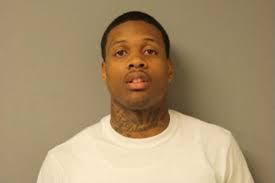
Lil Durk, born Durk Derrick Banks, is currently in federal custody at the Metropolitan Detention Center (MDC) in Los Angeles, California. He has been incarcerated continuously since October 24, 2024, when he was arrested by federal authorities near a Miami airport . All requests for bail have been denied by federal judges, who have deemed him a flight risk and a danger to the community.
Contrary to some rumors circulating online, Lil Durk has not been released, nor has his case been dismissed. He remains presumed innocent under law, having pleaded not guilty to all charges. His trial is currently scheduled to begin in late April 2026, though the date has been postponed multiple times due to the complexity of the case and the number of co-defendants involved . Understanding exactly why he is behind bars—and what happens next—requires a deep dive into the indictment, the alleged plot, and the legal maneuvering that has defined the past seventeen months.
The Federal Indictment: What Lil Durk Is Actually Accused Of
To understand why Lil Durk remains in jail, one must first understand the sheer severity of the charges against him. This is not a state-level gun possession case or a routine probation violation. The federal government has charged Durk with conspiracy to commit murder-for-hire, use of interstate facilities to commit murder-for-hire resulting in death, and possession and use of a machine gun in furtherance of a crime of violence .
The charges carry potential sentences ranging from decades to life in prison. Prosecutors allege that Durk acted as the architect of a sophisticated plot to assassinate fellow rapper Quando Rondo in August 2022. According to court filings, the plan involved coordinating travel from Chicago to Los Angeles, tracking the intended target, and executing a daylight ambush. The attack failed to kill Quando Rondo but resulted in the death of his cousin, Saviay’a “Lul Pab” Robinson, who was struck by gunfire while riding in a Cadillac Escalade .
What makes this case particularly striking to legal observers is the prosecution’s claim that Durk offered a $1 million reward for the hit. This figure—specific, substantial, and alleged to have been communicated through intermediaries—elevates the case far beyond typical street-level violence and into the realm of organized criminal enterprise. The government asserts that Durk used his stature as a successful recording artist and founder of Only The Family (OTF) to fund, incentivize, and reward those who carried out the violence .
The Alleged Bounty and the Killing of Lul Pab
On August 19, 2022, a white sedan pulled up alongside a black Escalade at a gas station in the Beverly Grove neighborhood of Los Angeles. Surveillance footage and police reports describe a scene of chaos: multiple shooters, more than a dozen rounds fired, and a vehicle speeding away into the Los Angeles traffic. Quando Rondo was inside the Escalade but was not struck. His cousin, sitting nearby, was hit and later pronounced dead at a hospital .
Federal prosecutors allege that this was not a spontaneous act of gang violence but a premeditated, well-funded hit job ordered by Lil Durk himself. The motive, according to court documents, was retaliation for the November 2020 killing of King Von, Durk’s close friend and OTF signee, outside an Atlanta hookah lounge. Quando Rondo’s associates were implicated in that incident, and prosecutors argue Durk waited nearly two years before allegedly deciding to act .
Perhaps the most damaging allegation against Durk is the claim that he promised to make the shooters “straight”—a term the government interprets as a pledge of payment and career advancement. A cooperating witness is reportedly prepared to testify that within OTF, this language was clearly understood as placing a monetary bounty on Quando Rondo’s life. Prosecutors further allege that Durk followed through on his promises even though the wrong man was killed. Rewards allegedly included custom jewelry, designer dental grills, featured appearances in OTF music videos, and lyrical mentions in songs released after the shooting .
Under federal law, these benefits constitute “anything of value,” meaning the alleged rewards are as incriminating as cash payments. This theory allows prosecutors to argue that the murder-for-hire conspiracy was executed and completed, even if the intended target survived.
Solitary Confinement: The Apple Watch and Five Months in the Box
One of the most contentious subplots of Lil Durk’s detention involves his treatment inside MDC Los Angeles. For more than five months—approximately 131 to 150 days, depending on reporting—Durk was held in solitary confinement . His cell measured just large enough for a bed, a toilet, and a sink. He was permitted one phone call per month and had no access to the prison commissary or in-person social visits.
The stated reason for this extreme restriction was an administrative infraction: Durk was found in possession of an unauthorized Apple Watch. Yet his legal team argued that the punishment was wildly disproportionate to the offense. In court filings, attorney Christy O’Connor characterized the conditions as potentially violative of the Eighth Amendment’s prohibition on cruel and unusual punishment . She noted that while officials initially justified solitary confinement as a necessary measure given Durk’s celebrity status, the rationale later shifted to cite the ongoing investigation.
In January 2026, following public pressure and formal legal motions, Durk was released from solitary confinement and returned to the general population at MDC Los Angeles . This development was widely viewed as a significant, albeit limited, victory for the defense. It did not change his detention status—he remains behind bars—but it alleviated what his lawyers described as a psychologically destructive living environment. For fans tracking the question Is Lil Durk in jail?, the answer now includes the nuance that while he remains incarcerated, he is no longer isolated around the clock.
The Trial Delay: Why “Unusual and Complex” Means Waiting Until 2026
Lil Durk’s trial was originally scheduled for October 2025. It has since been postponed multiple times. The current start date is set for either April 21 or April 28, 2026, though further delays are always possible in multi-defendant federal cases .
The official reason for the continuance, granted by a California federal judge, is that the case is “so unusual and so complex” that defense teams and prosecutors alike require additional preparation time . This is not a euphemism. The government has reportedly produced a massive volume of discovery—phone records, financial documents, social media activity, witness statements, and forensic evidence. Durk’s lead attorney, Drew Findling, acknowledged that while the defense was prepared to go to trial earlier, the court appropriately determined that the case was not yet ready for a jury .
Notably, Lil Durk himself objected to the delay. Court filings indicate that he did not join the stipulation to continue the trial, suggesting his desire to exercise his right to a speedy trial . However, in federal cases involving multiple defendants, a single defendant’s objection does not automatically prevent a continuance if the court finds the delay reasonable. Prosecutors successfully argued that a three-month extension was both reasonable and necessary.
For Durk, sitting in MDC Los Angeles, each postponement extends his pretrial detention. His birthday—October 19—came and went behind bars in 2024 and 2025. He turned 33 in custody, marking the milestone with an Instagram post shared by his team: “I don’t have all the words, but I’m thankful to still have a voice. I’m working on myself, working on peace” .
Rap on Trial: The Battle Over Lyrics as Evidence
A central flashpoint in Lil Durk’s case involves the prosecution’s attempt to introduce his rap lyrics as evidence of guilt. This practice, while not new, has drawn increasing scrutiny from legal scholars, civil liberties advocates, and the music industry. Durk’s defense team has vigorously opposed the inclusion of lyrics, arguing they are protected artistic expression, not literal confessions .
In February 2026, U.S. District Judge Michael W. Fitzgerald issued a partial ruling on the matter. He barred prosecutors from using a specific lyric from the song “Hanging With Wolves”: “I’m the type to hop on a flight with a warrant, you gotta catch me.” The government sought to use this line to argue consciousness of guilt, claiming it demonstrated Durk’s intent to flee at the time of his arrest. Judge Fitzgerald rejected this interpretation, stating that the lyric was “sheer propensity” evidence—material offered merely to suggest Durk is the type of person who would flee, which is generally inadmissible .
However, the judge has not yet ruled on the broader request to exclude all lyrics and music videos. Prosecutors have sought to admit lyrics from twelve songs, arguing that the material illustrates the roles of alleged co-conspirators and provides necessary context for the jury. Assistant U.S. Attorney Ian Yanniello contended that visual elements in music videos remove ambiguity, showing viewers exactly what the lyrics mean in practice .
Defense attorney Marissa Goldberg countered that this was “by far the most amount of rap lyrics we’ve ever seen proffered” in a criminal case. She accused the government of cherry-picking violent content while ignoring Durk’s Grammy-winning single “All My Life,” which features J. Cole and depicts Durk surrounded by children. “This is art, this is music,” Goldberg argued. “We would never say, ‘Because you said it and commercialized it, it should be used as evidence against you’” .
This legal battle has broader implications. If prosecutors succeed in admitting extensive lyrical content, it could set a precedent affecting countless other artists. If the defense prevails in excluding most or all of the material, it would align with a growing movement—legislative and judicial—to limit the use of rap lyrics as criminal evidence.
A Rare Win: The $12.5 Million Lawsuit Dismissed
Amid the avalanche of negative legal developments, Lil Durk secured one unequivocal victory in late 2025. A $12.5 million civil lawsuit brought by Exceed Talent Capital was dismissed with prejudice, meaning it cannot be refiled .
The lawsuit stemmed from a 2023 dispute over the song “Bedtime.” Exceed alleged that Durk and his former manager orchestrated a fraudulent deal, claiming the company had invested $450,000 toward securing perpetual rights to the track—rights that Durk allegedly did not have the authority to sell due to his existing recording agreement with Sony Music’s Alamo Records. When Alamo sent a cease-and-desist letter to Exceed, the deal collapsed. Exceed demanded its money back, received no response, and sued for more than $12 million in damages .
The dismissal came as a significant relief to Durk’s legal team. While the civil case was separate from the federal criminal indictment, it represented another front in a multi-pronged war. Having it resolved—and resolved favorably—allowed Durk’s attorneys to focus exclusively on the murder-for-hire defense. Moreover, the dismissal with prejudice prevented what could have been a massive financial judgment that would have complicated any future bail request or sentencing scenario.
The OTF Factor: Collective Loyalty and Legal Exposure
Lil Durk founded Only The Family (OTF) in 2010. What began as a loose collective of Chicago artists has evolved into a functioning record label with distribution deals, compilation albums, and a roster that has included King Von, Booka600, and Doodie Lo . But in the government’s telling, OTF is something else entirely: an alleged criminal enterprise.
Prosecutors have repeatedly emphasized that OTF functions as both a music label and a gang. They allege that Durk used his position atop this organization to orchestrate violence, reward participants, and intimidate rivals. The indictment names multiple OTF-affiliated individuals as co-conspirators, some of whom are currently incarcerated or deceased .
This dual framing—OTF as commerce and OTF as conspiracy—is central to the government’s case. It allows prosecutors to portray music industry activities (video shoots, label meetings, tour travel) as fronts for illegal coordination. It also permits them to introduce evidence of OTF’s history, including prior violent incidents involving its members. For the defense, the challenge is to disentangle legitimate business operations from alleged criminal conduct, arguing that Durk cannot be held criminally liable for the actions of every person who has ever worn OTF merchandise or appeared in an OTF video.
The table below summarizes the dual nature of OTF as presented by both parties in the case:
| Dimension | Defense Perspective | Prosecution Perspective |
|---|---|---|
| Primary Function | Independent record label and artist collective founded to uplift Chicago talent | Alleged criminal enterprise operating under the guise of a music label |
| Key Members | Rappers, producers, and creative personnel; some deceased or incarcerated due to unrelated violence | Named co-conspirators; alleged hitmen and facilitators of the murder plot |
| Financial Activity | Legitimate revenue from streaming, touring, merchandising, and label distributions | Alleged funding source for violence; rewards for shooters paid in jewelry, deals, and promotion |
| Cultural Meaning | Brotherhood, neighborhood representation, and artistic collaboration | Gang structure with hierarchy; Durk as the leader issuing orders |
| Legal Strategy | Argue OTF is a creative entity; members’ criminal acts are individual, not corporate | Argue OTF is a conspiracy; Durk is vicariously liable for acts committed on behalf of the group |
Life Inside: Working on Peace While Awaiting Trial
What is daily life like for Lil Durk as he awaits trial? While specific details are limited by security protocols, a portrait has emerged through legal filings, social media activity managed by his team, and statements from his attorneys.
Durk has access to legal calls and limited communication with family. His wife, India Royale, has attended court hearings and has been visible in her support. During a February 2026 hearing, Durk smiled broadly at her as he was led away in custody . His father has also attended proceedings. These small moments of human connection stand in stark contrast to the clinical atmosphere of federal court.
Creatively, Durk appears to be attempting to maintain his identity as an artist. In October 2025, he previewed a new song snippet from jail to mark his 33rd birthday. The caption—“Thankful to still have a voice”—suggested both gratitude and defiance . Fellow artists including G Herbo and Pooh Shiesty offered public support, with Shiesty, himself recently released from prison, calling for Durk’s freedom.
Durk has also spoken, via recorded statements played in court or shared through representatives, about his plans for “when [he gets] out” . This forward-looking posture is common among defendants in high-profile cases; it signals optimism and may also serve a strategic purpose, countering any narrative that he has abandoned hope or accepted defeat.
The Road to Trial: What Happens in April 2026
As of February 2026, Lil Durk’s case is in a holding pattern. The final pretrial conference has not yet been scheduled. Judge Fitzgerald continues to rule on evidentiary motions, with the major decision on rap lyrics still pending. Co-defendants’ attorneys are preparing their own defense strategies, some of which may align with Durk’s and others which may diverge or even conflict.
If the trial proceeds as scheduled in late April, it is expected to last several weeks. The prosecution will call witnesses, including the cooperating witness whose testimony allegedly connects Durk to the $1 million bounty. Forensic experts will testify about ballistics, cell phone location data, and financial transactions. Prosecutors will play music videos and display lyrics on courtroom screens.
The defense will counter by attacking the credibility of government witnesses, highlighting the absence of direct evidence tying Durk to the shooting, and arguing that his artistic expression has been misconstrued. Drew Findling, known for representing high-profile hip-hop clients, will likely emphasize the presumption of innocence and the government’s burden to prove guilt beyond a reasonable doubt.
If Durk is acquitted, he will be released immediately. If he is convicted, he will face a sentencing hearing that could result in decades of incarceration. Between now and then, the only certainty is uncertainty.
Industry Context: Hip-Hop on Trial
Lil Durk is far from the first rapper to face federal charges, and he will not be the last. His case sits within a long lineage stretching from 2Pac’s civil lawsuits through Shyne’s 2001 shooting case, Bobby Shmurda’s 2014 conspiracy indictment, and YNW Melly’s ongoing double murder prosecution. Yet Durk’s case arrives at a unique cultural moment.
The use of rap lyrics as evidence has become a rallying issue for the music industry. In 2022, New York passed a law limiting the admissibility of lyrics in criminal trials, and similar federal legislation—the Restoring Artistic Protection (RAP) Act—has been introduced in Congress. Durk’s trial could become the highest-profile test case for these legal reforms. If Judge Fitzgerald excludes most or all of the proffered lyrics, it will validate arguments that rap music is systematically misread by courts. If he admits them, it may galvanize further legislative action.
There is also the question of what happens to OTF and Durk’s catalog during his incarceration. Unlike some artists who see streaming numbers dip when they are off the road, Durk has maintained a strong presence. His 2023 album Almost Healed achieved gold status and won a Grammy. His ninth studio album, Deep Thoughts, was announced in late 2025, though its release strategy remains unclear . The label, Alamo Records, has not publicly commented on how Durk’s detention affects his contractual obligations.
What Supporters and Critics Are Saying
Public opinion on Lil Durk’s incarceration is deeply polarized. To his supporters, Durk is a victim of systemic overreach—a successful Black artist being punished preemptively, held in solitary confinement for months over a watch, and prosecuted using his own creative work as a weapon against him. They point to the dismissal of the Exceed lawsuit as evidence that not every allegation against him is true, and they argue that the murder-for-hire case relies heavily on a single cooperating witness whose credibility is questionable.
To his critics, Durk is a cautionary tale of fame enabling impunity. They argue that the violence he allegedly orchestrated was not artistic expression but lethal criminality, and that his celebrity status should not insulate him from accountability. The fact that Lul Pab was killed, they note, is undisputed. Someone fired those shots, and someone paid for that ammunition, those flights, and those rewards. The question is whether the government can prove Durk was that someone beyond a reasonable doubt.
Quote: “It cannot possibly have affected Judge Donahue or me or any other judge that some hothead who has an interest in the music industry did something stupid.” — U.S. District Judge Michael Fitzgerald, rejecting the defense motion regarding death threats against a magistrate judge .
This quote, while directed at a specific evidentiary dispute, captures the broader judicial posture toward the case. The court is unmoved by arguments it views as speculative or theatrical. It is focused on the indictment, the rules of evidence, and the schedule. The fact that the defendant is a Grammy winner who has collaborated with Drake and J. Cole is, to the judge, largely irrelevant.
Common Misconceptions About the Case
Several persistent myths surround Lil Durk’s incarceration, and clarifying them is essential for an accurate understanding of the case.
One misconception is that Lil Durk is in jail for murder. Legally, he has not been charged with murder. He is charged with conspiracy to commit murder-for-hire, which is a distinct federal offense. The distinction matters because conspiracy charges do not require the defendant to have personally pulled the trigger; they require agreement and action toward the illegal objective. Durk is not accused of shooting Lul Pab. He is accused of ordering it.
Another misconception is that his trial has been delayed because the case is weak. In reality, delays in complex federal cases are routine and do not signal either strength or weakness. Both sides required more time. The defense, which objected to the initial delay, is not claiming the case lacks merit; it is claiming the government cannot meet its burden of proof.
A third misconception is that Durk has been “forgotten” in jail. The high-profile nature of his legal team, the consistent media coverage, and the active engagement of his fanbase suggest otherwise. He remains a commercially viable artist and a figure of significant public interest.
Frequently Asked Questions
H3: Is Lil Durk currently in jail or prison?
Yes, Lil Durk is currently in federal custody at the Metropolitan Detention Center in Los Angeles. He has been held without bond since his arrest in October 2024. While he was released from solitary confinement in January 2026, he remains incarcerated while awaiting trial .
H3: What is Lil Durk charged with?
Lil Durk is charged with federal conspiracy to commit murder-for-hire, use of interstate facilities to commit murder-for-hire resulting in death, and firearm offenses including possession of a machine gun in furtherance of a crime of violence. These charges stem from an alleged 2022 plot to kill Quando Rondo that resulted in the death of Lul Pab .
H3: When is Lil Durk’s trial date?
Lil Durk’s trial is currently scheduled to begin in late April 2026, either on the 21st or the 28th. This date has been postponed multiple times due to the complexity of the case and the number of defendants involved. The trial was originally set for October 2025 .
H3: Did Lil Durk really offer $1 million for the hit?
Federal prosecutors allege that Lil Durk offered a $1 million bounty for the killing of Quando Rondo. According to court filings, an OTF member named Marcus “Muwop” Wilson purportedly offered this reward on Durk’s behalf. A cooperating witness is reportedly prepared to testify about this alleged arrangement .
H3: Will Lil Durk’s rap lyrics be used against him at trial?
Some lyrics have already been excluded, but a final ruling on the broader request to bar all lyrics and music videos is pending. Judge Fitzgerald ruled in February 2026 that a specific lyric from “Hanging With Wolves” cannot be used to argue consciousness of guilt. Prosecutors are still seeking to admit lyrics from eleven other songs .
H3: Has Lil Durk been denied bail?
Yes. Multiple federal judges have denied Lil Durk’s requests for bail. He has been detained without bond since his arrest. Judges have cited both flight risk and danger to the community as grounds for continued detention .
H3: Is Lil Durk still making music while in jail?
Lil Durk has previewed new music from jail, including a song snippet shared on Instagram for his 33rd birthday. He has also announced a forthcoming ninth studio album titled Deep Thoughts, though its release timeline remains unclear given his incarceration .
Conclusion: The Voice, Silenced and Waiting
So, is Lil Durk in jail? Yes. He has been held in federal custody since October 2024, and he will remain there at least through the spring of 2026. His detention is not an administrative formality; it is the direct result of a federal indictment charging him with orchestrating a murder-for-hire plot that cost a young man his life. The case against him is serious, specific, and backed by significant prosecutorial resources.
Yet to leave the answer there is to miss the full texture of the story. Lil Durk is an artist who rose from the Englewood neighborhood of Chicago to the Grammy stage, who built a label and a collective that gave opportunities to others from similar circumstances, and who now sits in a small cell waiting for a jury to decide his fate. He has spent months in solitary confinement over an Apple Watch. He has watched his trial date slide further into the future. He has heard his own words—words he wrote as poetry, as performance, as therapy—read back to him in court as evidence of criminal intent.
The spring of 2026 will bring either resolution or another delay. If the trial proceeds, the world will learn far more about what happened in August 2022, about the inner workings of OTF, and about the line between rap and reality. If Durk is acquitted, he will walk out of MDC Los Angeles and attempt to rebuild a career that was interrupted at its peak. If he is convicted, his voice will be silenced for years, perhaps decades.
For now, the answer remains the same as it was in October 2024: Yes, Lil Durk is in jail. And he is waiting.