





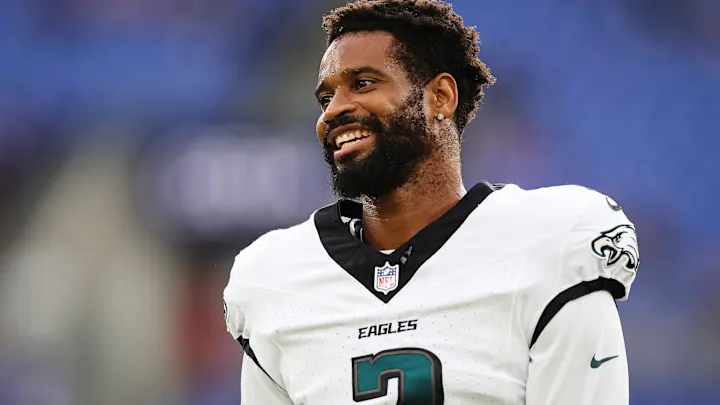
Darius Slay Contract Extension: A Strategic Analysis of Value, Timing, and Legacy
Introduction
In the high-stakes chess game of NFL roster construction, the decision surrounding a Darius Slay contract extension represents one of the most compelling and complex challenges a front office can face. It is a puzzle that sits at the intersection of aging curves, salary cap acrobatics, championship windows, and the intrinsic value of veteran leadership. As the NFL’s financial landscape expands, with projections pointing to a record-breaking salary cap exceeding $300 million per team for the 2026 season, the calculus for retaining elite, albeit older, talent like Slay evolves. This isn’t merely a negotiation about dollars and years; it’s a definitive statement about a team’s identity, its immediate competitive aspirations, and its philosophy on how to build a sustainable winner.
This comprehensive analysis will dissect the multifaceted considerations that frame the Darius Slay contract extension debate. We will explore the delicate balance between rewarding past performance and investing in future production, the strategic implications of the league’s soaring financial ceiling, and the specific team contexts—most notably that of the Philadelphia Eagles—where such a decision carries immense weight. From statistical deep dives and film room intangibles to the cold, hard realities of cap management and succession planning, we will provide the framework to understand one of the NFL’s most nuanced offseason storylines. Whether you’re a fan, a fantasy enthusiast, or an aspiring executive, grasping the dynamics of this potential deal offers a masterclass in modern football operations.
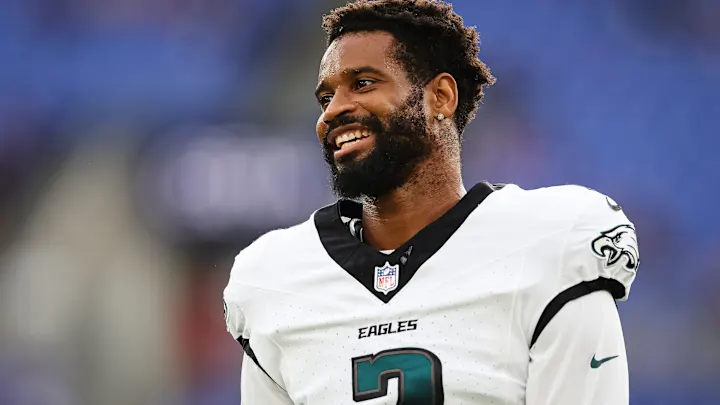
The Financial Landscape of the Modern NFL
The backdrop for any major contract discussion is the NFL’s ever-escalating salary cap, a figure that directly dictates the feasibility of retaining veteran stars. The league has informed teams that the 2026 salary cap is projected to land between $301 million and $305 million per team, continuing a dramatic upward trajectory from the $279.2 million cap of 2025. This rising tide, fueled by massive media rights deals, does more than just give teams more money to spend; it fundamentally reshapes market valuations and contract structures.
For a player like Darius Slay, this cap growth is a double-edged sword. On one hand, it means teams have more short-term flexibility to accommodate a sizable new deal. On the other, it resets the market for all players, making the premium for proven, top-tier talent even steeper. A team must decide if allocating a significant portion of this new money to a player in his mid-30s is the most efficient path to roster improvement, especially when younger, ascending players at the same position will command deals benchmarked against this new financial reality.
Evaluating Darius Slay’s On-Field Value
Assessing Slay’s value begins with a clear-eyed analysis of his current performance relative to his peak. Even as he ages, Slay consistently grades as one of the league’s more effective coverage corners, utilizing veteran savvy, film study, and technically sound play to mitigate any slight loss in pure athleticism. His ability to travel with an opponent’s top receiver and operate effectively in both man and zone schemes provides immense schematic flexibility for a defensive coordinator. This isn’t just about interceptions; it’s about eliminating a primary option and forcing quarterbacks into less favorable matchups.
However, the evaluation must also account for durability and the natural aging curve for NFL defensive backs. While Slay has remained relatively healthy, the risk of a decline in speed or recovery time increases with each season. The critical question for a team considering a Darius Slay contract extension is whether his current high level of play is sustainable for the length of a new deal, or if the contract will inevitably pay for past performance on the back end. His value in 2024 is undeniable, but the projection for 2025 and 2026 carries more uncertainty, making the structure of any extension as important as its total value.
The Philadelphia Eagles’ Defensive Crossroads
The Philadelphia Eagles’ situation provides the most relevant and urgent case study for a potential Darius Slay contract extension. Following their Super Bowl championship, the Eagles experienced significant defensive turnover, losing key free agents including Slay himself, along with Josh Sweat and Milton Williams. This exodus has created a clear strategic imperative. As General Manager Howie Roseman indicated, the “pendulum will swing toward the defense” in the upcoming team-building cycle.
Retaining Slay would be a cornerstone of that defensive reinvestment. He represents not just a talented player, but a known cultural entity and leader within the locker room. For an Eagles team that still views itself in a championship window, the cost of replacing his production—both in terms of draft capital and free-agent dollars—might exceed the cost of retaining him, even on a lucrative short-term deal. The decision is a microcosm of the Eagles’ entire competitive philosophy: do you maintain continuity with a veteran core, or aggressively pivot toward a younger, cheaper defensive rebuild?
The Intangible Factor: Leadership and Culture
Beyond the metrics and the film, the argument for a Darius Slay contract extension is often rooted in intangible qualities that are difficult to quantify but essential to winning. Slay is widely regarded as a premier leader, both in the cornerbacks room and across the entire defense. He sets a standard for preparation, resilience, and competitiveness that elevates the players around him. This mentorship is invaluable for developing young defensive backs, who can learn the nuances of the position from a perennial Pro Bowl talent.
In a league where chemistry and culture are frequently cited as differentiators, losing a vocal and respected leader can have a ripple effect that undermines a unit’s cohesion. For a team like the Eagles, which is simultaneously trying to compete now and integrate younger talent, Slay’s presence provides a stabilizing force. The cost of this leadership is factored into his contract, as teams often pay a premium for players who are both high performers and cultural amplifiers, recognizing that their impact extends beyond their individual statistical output.
Contract Structure and Salary Cap Mechanics
The architecture of a potential extension is where front office creativity meets financial necessity. A simple, high-value extension for an aging player is often a cap liability waiting to happen. Instead, the most likely framework for a Darius Slay contract extension involves strategic use of signing bonuses, voidable years, and specific salary guarantees to manage the annual cap hit. The goal is to keep the player’s compensation competitive while smoothing out the cap charge over multiple seasons, sometimes even beyond the realistic playing years.
For example, a two-year extension could be structured with a moderate base salary in the first year, coupled with a sizable signing bonus that prorates over four or five years (including void seasons). This gives Slay significant upfront money and lowers his Year 1 cap number, providing the team with immediate flexibility. The later years of the deal would likely contain non-guaranteed salaries, offering the team a potential escape hatch if performance declines. This complex dance is essential to making such a deal palatable under the cap.
Market Comparables for Veteran Cornerbacks
To gauge the potential value of a new deal for Slay, it is instructive to examine recent contracts for cornerbacks in a similar age and performance tier. The market for players over 30 is distinct from the market for prime-age free agents; teams are generally willing to offer shorter terms with higher average annual values (AAV) but less long-term security. These deals often include performance incentives and roster bonuses that protect the team.
Table: Comparative Contract Structures for Veteran Cornerbacks
| Player (Age at Signing) | Contract Length | Total Value | Average Annual Value (AAV) | Key Structural Notes |
|---|---|---|---|---|
| Patrick Peterson (33) | 2 years | $14M | $7M | High guarantee in Year 1; team option for Year 2. |
| Steven Nelson (31) | 3 years | $25.5M | $8.5M | Front-loaded guarantees; final year non-guaranteed. |
| Projected Darius Slay Deal | 2-3 years | $27M-$38M | $13M-$15M | Likely includes void years, signing bonus proration, and performance escalators. |
As illustrated, a Darius Slay contract extension would likely aim to set a new benchmark in AAV for the over-30 cornerback market, reflecting his status as a true “alpha” cover man, while the length would remain conservative. The structure would be heavily negotiated, balancing Slay’s desire for security with the team’s need for flexibility and protection against age-related decline.
The Risk Assessment of Aging Curves
Committing significant resources to any athlete in his mid-30s involves inherent risk. For cornerbacks, the decline can be sudden and dramatic, as the position demands elite-level short-area quickness, recovery speed, and change-of-direction ability. While some legends have defied Father Time, the historical data suggests a noticeable drop-off for most players at the position after age 32. A team must honestly assess whether Slay’s game—which relies on technique and intelligence as much as pure athleticism—is more or less susceptible to this decline.
The financial risk of a misstep is magnified by the opportunity cost. The money committed to a Darius Slay contract extension is capital that cannot be used to address other roster needs, whether in free agency or by extending younger, homegrown talent. If Slay’s play falls off, the team could be saddled with a “dead money” cap charge that hampers its ability to improve the roster for a season or more. This risk assessment is the most sobering part of the analysis, forcing teams to weigh emotional attachment and past contributions against cold, hard future probabilities.
The Alternative: Life Without Slay
If a team decides against an extension, it must have a viable contingency plan. The alternatives typically fall into three categories: the NFL Draft, free agency, or an internal promotion. Each path carries its own set of costs and uncertainties. Using a high draft pick on a cornerback addresses the long-term need but introduces the volatility of a rookie’s development curve and immediately lowers the floor of the position group. Relying on a younger, cheaper in-house option is cap-friendly but bets heavily on unproven talent.
The free-agent route might involve signing a younger, ascending player to a longer-term deal, or finding a cheaper, short-term veteran bridge. As Eagles GM Howie Roseman navigates an offseason focused on defense, with key players like Jaelan Phillips and Reed Blankenship also hitting the market, every dollar spent or saved on a Slay decision reverberates across the entire unit. The question becomes: does allocating, for instance, $15 million per year to Slay yield a better overall defensive outcome than spending that same $15 million on two or three other defensive pieces?
The Draft and Developmental Pipeline
A critical factor in the extension decision is the state of a team’s cornerback pipeline. A franchise with a promising young corner ready to step into a starting role has far more leverage and can approach a Darius Slay contract extension from a position of strength, perhaps offering a shorter, team-friendly deal. Conversely, a team with no clear successor faces immense pressure to retain its established star, lest it create a gaping hole in its defense. This makes the draft history and player development success of a team central to the negotiation.
Investing in the cornerback position through the draft is a cost-effective strategy, but it requires patience and hit rates that are never guaranteed. A team that consistently drafts and develops well at the position can sustainably manage the turnover inherent in the NFL. This “next man up” philosophy allows a franchise to make tougher decisions on veteran contracts, knowing it has a fallback plan. The absence of such a plan often forces teams into extensions they might otherwise avoid.
The Fan and Media Perspective
The external pressure surrounding a high-profile player’s contract can subtly influence front-office decisions. Darius Slay is a beloved figure in Philadelphia, a charismatic playmaker who has delivered iconic moments. From a business and public relations standpoint, allowing such a player to depart in free agency can be a tough sell to a passionate fanbase expecting the team to “do whatever it takes” to win. This sentiment can create a narrative that pressures management to prioritize sentiment over strict asset management.
However, savvy executives like Howie Roseman are typically insulated from making reactive decisions based purely on fan sentiment. They understand that their job is to build the best possible roster over the long term, not to win the offseason news cycle. As one NFL analyst noted regarding a different star’s extension, “The days of you just walking into extensions that start flat with your current salary… I wonder if those are just over”. This sentiment reflects a league-wide trend toward fiscal caution, even with popular players. The final decision on a Darius Slay contract extension will be a clinical one, made in quiet offices, far from the noise of talk radio and social media.
A Quote from the Front Office
The strategic mindset of a team considering such a move was encapsulated by Philadelphia Eagles General Manager Howie Roseman in his end-of-season remarks. Focusing on the defensive rebuild ahead, he stated, “During his end-of-season press conference, Howie Roseman offered insight into the process, what takes place, and how the pendulum will swing toward the defense”. This comment underscores that the decision on Slay is not isolated; it is a key variable in a larger strategic equation aimed at re-tooling a championship-caliber unit.
The Verdict and Likely Outcome
Synthesizing all these factors—financial, performance-based, cultural, and strategic—leads to a nuanced prediction. The most probable outcome for a Darius Slay contract extension is a relatively short-term, high-AAV deal with a team-friendly structure. Think two years with a club option for a third, featuring a significant signing bonus to lower the early cap hits and non-guaranteed money on the back end. This satisfies Slay’s desire for top-tier compensation and recognition while giving the team a measure of protection and an escape route after the 2025 or 2026 season.
For the Philadelphia Eagles, given their stated defensive focus, cap space from the rising league ceiling, and the clear void left by his departure, the incentive to get a deal done is strong. The final agreement will likely be a testament to modern contract engineering, a pact that honors a great player’s legacy while adhering to the unsentimental principles of championship roster construction. It will stand as a case study in how elite NFL franchises navigate the twilight years of a star’s career.
Conclusion
The journey to a Darius Slay contract extension is a labyrinthine process that reveals the core tensions of building an NFL team. It is a negotiation about numbers that is deeply human, a calculation of future risk that is rooted in past accomplishments, and a business decision that feels intensely personal to fans. In the end, these deals are about value—not just the market value of a cornerback, but the value of stability, leadership, and proven performance to a specific team at a specific moment in its competitive cycle.
As the NFL’s financial landscape continues to expand, the frameworks for these decisions will evolve, but the essential questions will remain. How do you honor the players who built your culture while relentlessly planning for the future? The resolution of the Darius Slay contract extension saga will provide a clear window into one franchise’s answer. It is a decision that will ripple through the defense, influence the draft, and help define the team’s identity for the seasons to come, proving that in the NFL, the most impactful moves are often about more than just the game on the field.
Frequently Asked Questions
What are the main factors that will determine if Darius Slay gets a contract extension?
The decision hinges on a triad of considerations: an honest assessment of Slay’s physical ability to maintain elite play into his mid-30s, the structure of a deal that protects the team from cap peril if he declines, and the state of the team’s cornerback depth chart. A Darius Slay contract extension must make sense in both the immediate competitive window and the long-term financial plan.
How does the rising NFL salary cap impact a potential deal for Slay?
The projected 2026 cap of $301-$305 million gives teams more short-term flexibility to absorb a larger contract. This makes a high-average-annual-value deal more feasible without crippling the cap. However, it also resets the entire market, meaning Slay’s camp will argue for a salary commensurate with this new financial reality, viewing a Darius Slay contract extension as a chance to set the market for veteran corners.
Is Slay’s age too significant a risk for a lucrative extension?
It is the central risk. While Slay’s technique-based game may age better than one reliant solely on speed, history shows a steep drop-off risk for corners after 32. Any Darius Slay contract extension will be structured to mitigate this risk, likely through shorter term lengths, performance bonuses, and minimal guarantees in the later years of the deal to provide the team with a clear exit strategy.
What alternatives do teams have if they don’t extend Slay?
The primary alternatives are the NFL draft, free agency, or promoting a younger player already on the roster. Each has downsides: draft picks are unproven, premium free agents are expensive, and internal options may not be ready. The opportunity cost of a Darius Slay contract extension is the ability to pursue these alternative paths, so the team must be confident he is the best use of those resources.
Could Slay’s leadership role justify a higher-value extension?
Absolutely. While difficult to quantify, leadership is a real asset. Slay’s presence elevates the entire secondary’s preparation and performance, and his mentorship accelerates the development of young players. In a Darius Slay contract extension, teams often build in a premium for these intangible qualities, recognizing that his impact extends beyond his individual coverage statistics and contributes to a stronger overall team culture.