





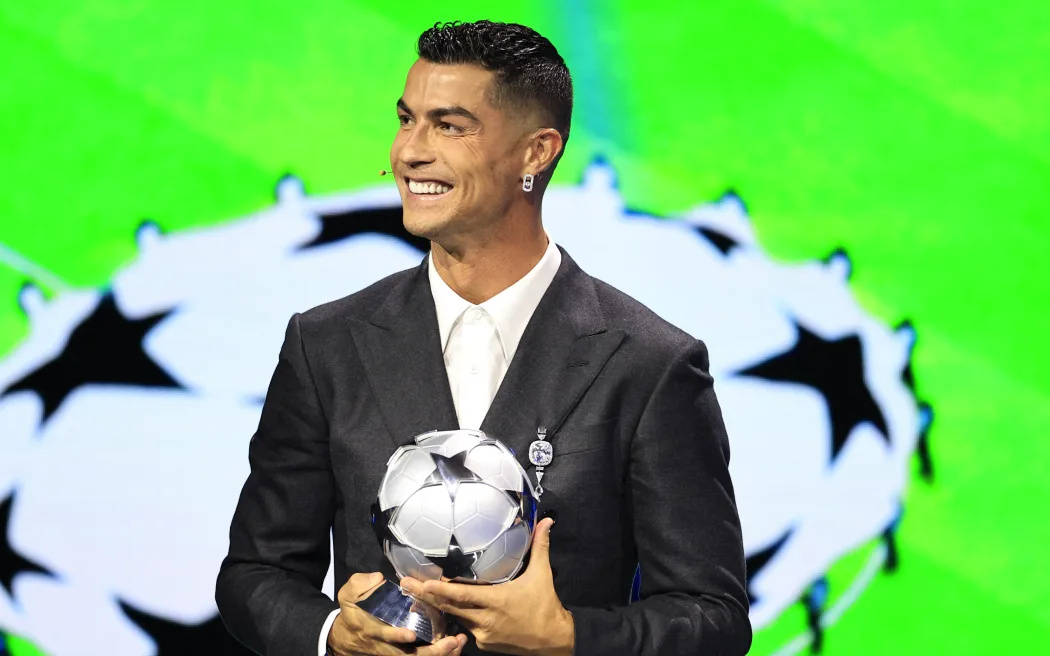
Cristiano Ronaldo and the World Cup: The Definitive Chronicle of a 20-Year Quest
For over two decades, the FIFA World Cup has presented Cristiano Ronaldo with football’s ultimate stage and its most elusive prize. As he stands on the precipice of an unprecedented sixth tournament, his journey is a gripping saga of individual brilliance, national ambition, and a relentless pursuit of the one trophy that has remained just out of reach. This is the complete story of Ronaldo’s World Cup—a tale of breathtaking highs, profound disappointments, and an undying legacy still being written.
The narrative of Cristiano Ronaldo at the World Cup is a compelling paradox. It is the story of a player universally regarded as one of the greatest of all time, whose superhuman exploits for club and country in other competitions have somehow not fully translated to the grandest stage of all. From the prodigious, step-over-wielding winger in Germany in 2006 to the veteran leader heading to North America in 2026, his five World Cup campaigns map the evolution of a legend while highlighting the unique challenge this tournament poses. For Portugal, a nation without a World Cup title, Ronaldo has been both its greatest hope and a symbol of its limitations. As we examine his two-decade-long quest, we uncover not just statistics and results, but the very essence of sporting ambition and the complex relationship between a superstar and the collective dream he carries.
The Formative Years: 2006 and 2010 World Cups
Cristiano Ronaldo’s World Cup debut in 2006 came at a time when he was transitioning from a flashy talent into a global phenomenon. At just 21 years old, he was already a Premier League champion with Manchester United and a key part of a talented Portuguese “Golden Generation” that included Luis Figo and Deco. His tournament was a microcosm of his early career: moments of sublime skill, like his penalty goal against Iran, were mixed with controversy, most notably his role in the dismissal of clubmate Wayne Rooney against England. Portugal’s run to the semifinals, where they fell to a Zinedine Zidane-led France, offered early promise that World Cup glory might one day be within his grasp. It was a respectable introduction, but one that ended with a sobering lesson in the level required to reach the very top.
Four years later in South Africa, the burden of expectation had grown exponentially. Now the world’s most expensive player following his move to Real Madrid, Ronaldo was handed the captain’s armband and tasked with carrying a less-talented Portuguese squad. The result was a subdued and frustrating campaign. Portugal played defensively, and Ronaldo managed just one goal in a 7-0 rout of North Korea, ending a 16-month international scoring drought. The team’s exit in the round of 16 to eventual champions Spain left Ronaldo famously describing himself as a “broken man”. This tournament highlighted a recurring theme: the difficulty of a single transcendent player elevating an entire national team in a sport defined by collective effort, setting the stage for the complex relationship between Ronaldo’s genius and Portugal’s fortunes in the tournaments to come.
The Struggle for Consistency: 2014 and 2018 World Cups
The 2014 World Cup in Brazil stands as the lowest point in Ronaldo’s World Cup journey. Arriving as the reigning Ballon d’Or winner and a Champions League champion, he was plagued by a persistent knee injury that severely limited his mobility and impact. Portugal’s campaign was a disaster from the start, beginning with a 4-0 thrashing by Germany. Despite a late, trademark goal against Ghana, the team was eliminated in the group stage on goal difference. The narrative at home began to shift, with open questions emerging about his capacity to lead the national team on this specific stage. It was a stark contrast to his club dominance and raised doubts about whether his physical, explosive style could consistently conquer the condensed, high-pressure format of a World Cup.
Russia 2018 delivered Ronaldo’s most iconic individual World Cup performance but also underscored his tournament’s narrative limits. He announced his arrival with a stunning, career-defining hat-trick against Spain, single-handedly securing a 3-3 draw with a last-minute free-kick. However, after scoring the winner against Morocco, his influence waned. Portugal was eliminated by Uruguay in the round of 16, with Ronaldo failing to score in a knockout match yet again. This pattern became impossible to ignore: spectacular group-stage explosions followed by quiet knockouts. While the hat-trick secured his legacy as a player for the big occasion, the early exit reinforced the idea that his World Cup story was one of brilliant fragments rather than a sustained, title-winning narrative. He had shown he could win a game, but not yet a tournament.
The Veteran’s Last Dance and a New Reality: 2022 World Cup
The 2022 World Cup in Qatar was supposed to be the triumphant final chapter, but it evolved into a poignant story of transition. By converting a penalty against Ghana, Ronaldo earned a historic record as the first male player to score in five different World Cups. Yet, it was clear to observers that the 37-year-old version of the striker was inhibiting Portugal’s fluid attack. Coach Fernando Santos made the monumental decision to bench his iconic captain for the knockout stages. The team responded with a thrilling 6-1 victory over Switzerland, led by a hat-trick from young replacement Gonçalo Ramos. Ronaldo’s tournament ended with him as a substitute, unable to find an equalizer in a quarterfinal loss to Morocco, departing the field in tears.
This tournament forced a fundamental reassessment of Ronaldo’s role.Ronaldo and the For the first time, the national team’s success seemed to move beyond his direct, central influence. The emergence of a talented new generation featuring Bruno Fernandes,Ronaldo and the Bernardo Silva, and Rafael Leão suggested Portugal’s future might be brighter as a cohesive unit rather than a vehicle for one superstar. The 2022 campaign answered one question—proving Portugal could excel without him as the focal point—while posing another: what was his purpose in the setup moving forward? It was a difficult but necessary evolution, setting a complex precedent for his involvement in 2026.
The Statistical Portrait: Analyzing Ronaldo’s World Cup Numbers
A deep dive into the statistics reveals the precise contours of Ronaldo’s World Cup impact and where it diverges from his otherworldly career norms. Across 22 matches, he has scored 8 goals and provided 2 assists, averaging a goal every 220 minutes. His most productive tournament was 2018, where he netted four times, including his sole hat-trick. However, the most telling statistical split is between the group stage and the knockout rounds. All eight of his goals have come in the initial group phase; in eight knockout appearances, he has failed to score or register an assist. This critical drought in the games that matter most is the central statistical paradox of his World Cup career.
When placed under a finer lens, the data shows a player whose contribution extends beyond goals but remains inconsistent on this stage. He has taken 102 shots, with 35.3% on target, and created 26 key passes. His versatility is evidenced by goals scored with his right foot, left foot, and head, and from both open play and set-pieces. Yet, advanced metrics like average match ratings (7.04) and Man of the Match awards (1) pale in comparison to his usual dominance.Ronaldo and the The numbers paint a picture of a very good World Cup performer—a record-setter for longevity—but not the statistically dominant, game-inverting force that defines his club career and other international competitions like the European Championship.
Cristiano Ronaldo’s World Cup Performance by Tournament
| World Cup | Appearances | Goals | Assists | Stage Reached | Key Highlight |
|---|---|---|---|---|---|
| 2006 (Germany) | 6 | 1 | 0 | Semifinals | Scored in a shootout vs. England |
| 2010 (S. Africa) | 4 | 1 | 1 | Round of 16 | Goal in 7-0 win vs. North Korea |
| 2014 (Brazil) | 3 | 1 | 1 | Group Stage | Scored winner vs. Ghana despite injury |
| 2018 (Russia) | 4 | 4 | 0 | Round of 16 | Historic hat-trick vs. Spain |
| 2022 (Qatar) | 5 | 1 | 0 | Quarterfinals | Became first to score in 5 World Cups |
| TOTALS | 22 | 8 | 2 | N/A | One hat-trick, 10 wins from 22 games |
Portugal’s World Cup History: The National Context
To fully understand Ronaldo’s quest, one must view it through the prism of Portugal’s own World Cup history, which is one of sporadic brilliance rather than sustained power. Before his era, the nation had qualified for just three tournaments (1966, 1986, 2002). Their greatest achievement came in 1966, led by the legendary Eusébio, who scored nine goals to propel them to a third-place finish. This created a long shadow and a national yearning that Ronaldo inherited. For decades, Portugal was a peripheral football nation; its rise to consistent contender is inextricably linked to the generation Ronaldo headlines.
Ronaldo’s tenure has coincided with Portugal’s most consistent period of qualification and competitiveness. He has been the face of the team for five consecutive tournaments, helping them reach the semifinals in 2006 and the quarterfinals in 2022. With 22 caps, he is Portugal’s most-capped World Cup player, and his 8 goals place him second on the nation’s all-time scoring list behind only Eusébio. His journey mirrors the nation’s modern football identity: ambitious, talented, and forever knocking on the door of true immortality. The dream of winning the Ronaldo World Cup is, in essence, the dream of Portugal finally ascending to the top of the global football hierarchy, a mission that has defined his entire international career.
The Defining Rivalry: Ronaldo vs. Messi on the World Stage
No analysis of Cristiano Ronaldo’s World Cup narrative is complete without addressing his eternal rivalry with Lionel Messi. For over 15 years, their parallel careers have been the sport’s central debate. Until 2022, their World Cup stories were strikingly similar: phenomenal players who carried their nations but fell agonizingly short of the ultimate prize. The 2022 final in Qatar, where Messi lifted the trophy with Argentina, irrevocably changed that dynamic. The statistical comparison now leans decisively in Messi’s favor: 13 goals and 8 assists in 26 games,Ronaldo and the including 5 goals and 6 assists in 12 knockout matches. Ronaldo’s 8 goals and 2 assists,Ronaldo and the with no knockout contributions, highlight a significant performance gap on this specific stage.
This contrast has become the final, and for many, the most convincing argument in the GOAT (Greatest of All Time) debate. While Ronaldo holds the unique record of scoring in five different World Cups, Messi’s legacy is defined by his transformative influence in leading his country to victory,Ronaldo and the earning the Golden Ball twice in the process. The rivalry underscores a fundamental truth about the World Cup’s weight: it magnifies legacies like no other event. For Ronaldo, the absence of a World Cup title or a defining tournament MVP performance remains the most cited counterpoint to his claims of superiority, a gap in his resume that the 2026 tournament represents one final, dramatic chance to fill.
The Final Chapter: The 2026 World Cup and Beyond
As the football world looks toward the expanded 2026 World Cup across the United States, Canada, and Mexico, Ronaldo is poised to shatter another record by becoming the first player to compete in six tournaments. At 41 years old, his role will be radically different. Portugal manager Roberto Martinez has already indicated that Ronaldo, while still captain, is “not a guaranteed starter” and will be one of three strikers managed carefully throughout the demanding campaign. The coach has emphasized the need for a pragmatic approach, stating, “When Cristiano Ronaldo is doing well, it’s very important for the national team”, acknowledging his influence while accepting his physical limitations.
Portugal’s schedule offers a manageable path, with group stage games in Houston against a playoff winner and Uzbekistan, followed by a match in Miami against Colombia. The strategic question is how to harness Ronaldo’s enduring predatory instincts and leadership without compromising the team’s dynamism. His quest is no longer to dominate every minute, but to provide decisive moments in what would be an astonishing twilight achievement. Winning the 2026 World Cup would be the most incredible feat in his incredible career, a storybook ending that would reshape his entire legacy. Conversely, a diminished role and an early exit would solidify the current narrative. This final act carries immense stakes, not just for a trophy, but for the final judgment of his Ronaldo World Cup epic.
Conclusion: The Legacy of a Relentless Quest
Cristiano Ronaldo’s World Cup story is a profound study in sporting ambition. It is a tale marked by historic milestones—first to score in five editions, a legendary hat-trick, a record sixth appearance on the horizon—yet colored by the palpable absence of the trophy he has chased for twenty years. He has been Portugal’s constant, their record-setter, and their talisman, yet the tournament has consistently proven to be his most formidable opponent. The quest has revealed the limits of individual brilliance in a supremely collective endeavor and has added a layer of poignant humanity to a figure often viewed as a superhuman goal machine.
What remains undeniable is that he has irrevocably elevated Portuguese football on the world stage. His drive has made Portugal a permanent fixture in World Cup conversations. As he approaches his final campaign, the world will watch to see if this ultimate competitor can author one last, defiant twist to the story. Whether he lifts the trophy or not, his Ronaldo World Cup journey encapsulates the beauty and brutality of chasing a dream at the highest level. It is a legacy of relentless pursuit, a testament to the fact that sometimes the most compelling stories are not about the destination, but about the awe-inspiring, decades-long fight to reach it.
Frequently Asked Questions
Has Cristiano Ronaldo ever won a World Cup?
No, Cristiano Ronaldo has never won the FIFA World Cup. This remains the most significant trophy missing from his vast collection of team and individual honors. Despite leading Portugal to a European Championship title in 2016,Ronaldo and the the ultimate prize in global football has eluded him throughout his career.
How many World Cup goals does Ronaldo have?
Cristiano Ronaldo has scored 8 goals across his five World Cup tournaments (2006, 2010, 2014, 2018, 2022). This places him second on Portugal’s all-time World Cup scoring list, behind only Eusébio, who scored 9 goals in the 1966 tournament alone.
What is Ronaldo’s best World Cup performance?
Statistically, his best World Cup was 2018 in Russia, where he scored four goals, including a memorable hat-trick against Spain. In terms of team achievement, his debut in 2006 was the most successful, as Portugal reached the semifinals,Ronaldo and the finishing in fourth place after losses to France and Germany.
Will Ronaldo play in the 2026 World Cup?
Yes, Cristiano Ronaldo is expected to play for Portugal in the 2026 World Cup in North America. This would make him the first player ever to appear in six World Cup tournaments. Portugal’s manager, Roberto Martinez, has confirmed Ronaldo will be part of the squad, though likely in a managed role rather than as an automatic starter.
How does Ronaldo’s World Cup record compare to Messi’s?
Lionel Messi holds a superior overall World Cup record. He has more goals (13 to 8), more assists (8 to 2), and crucially, has performed in knockout games, with 5 goals and 6 assists in the later stages. Messi also won the tournament in 2022 and claimed two Golden Ball awards, whereas Ronaldo has never won a World Cup or its best player prize.
The narrative of Cristiano Ronaldo at the World Cup is a compelling paradox. It is the story of a player universally regarded as one of the greatest of all time, whose superhuman exploits for club and country in other competitions have somehow not fully translated to the grandest stage of all. From the prodigious, step-over-wielding winger in Germany in 2006 to the veteran leader heading to North America in 2026, his five World Cup campaigns map the evolution of a legend while highlighting the unique challenge this tournament poses. For Portugal, a nation without a World Cup title, Ronaldo has been both its greatest hope and a symbol of its limitations. As we examine his two-decade-long quest, we uncover not just statistics and results, but the very essence of sporting ambition and the complex relationship between a superstar and the collective dream he carries.
The Formative Years: 2006 and 2010 World Cups
Cristiano Ronaldo’s World Cup debut in 2006 came at a time when he was transitioning from a flashy talent into a global phenomenon. At just 21 years old, he was already a Premier League champion with Manchester United and a key part of a talented Portuguese “Golden Generation” that included Luis Figo and Deco. His tournament was a microcosm of his early career: moments of sublime skill, like his penalty goal against Iran, were mixed with controversy, most notably his role in the dismissal of clubmate Wayne Rooney against England. Portugal’s run to the semifinals, where they fell to a Zinedine Zidane-led France, offered early promise that World Cup glory might one day be within his grasp. It was a respectable introduction, but one that ended with a sobering lesson in the level required to reach the very top.
Four years later in South Africa, the burden of expectation had grown exponentially. Now the world’s most expensive player following his move to Real Madrid, Ronaldo was handed the captain’s armband and tasked with carrying a less-talented Portuguese squad. The result was a subdued and frustrating campaign. Portugal played defensively, and Ronaldo managed just one goal in a 7-0 rout of North Korea, ending a 16-month international scoring drought. The team’s exit in the round of 16 to eventual champions Spain left Ronaldo famously describing himself as a “broken man”. This tournament highlighted a recurring theme: the difficulty of a single transcendent player elevating an entire national team in a sport defined by collective effort, setting the stage for the complex relationship between Ronaldo’s genius and Portugal’s fortunes in the tournaments to come.
The Struggle for Consistency: 2014 and 2018 World Cups
The 2014 World Cup in Brazil stands as the lowest point in Ronaldo’s World Cup journey. Arriving as the reigning Ballon d’Or winner and a Champions League champion, he was plagued by a persistent knee injury that severely limited his mobility and impact. Portugal’s campaign was a disaster from the start, beginning with a 4-0 thrashing by Germany. Despite a late, trademark goal against Ghana, the team was eliminated in the group stage on goal difference. The narrative at home began to shift, with open questions emerging about his capacity to lead the national team on this specific stage. It was a stark contrast to his club dominance and raised doubts about whether his physical, explosive style could consistently conquer the condensed, high-pressure format of a World Cup.
Russia 2018 delivered Ronaldo’s most iconic individual World Cup performance but also underscored his tournament’s narrative limits. He announced his arrival with a stunning, career-defining hat-trick against Spain, single-handedly securing a 3-3 draw with a last-minute free-kick. However, after scoring the winner against Morocco, his influence waned. Portugal was eliminated by Uruguay in the round of 16, with Ronaldo failing to score in a knockout match yet again. This pattern became impossible to ignore: spectacular group-stage explosions followed by quiet knockouts. While the hat-trick secured his legacy as a player for the big occasion, the early exit reinforced the idea that his World Cup story was one of brilliant fragments rather than a sustained, title-winning narrative. He had shown he could win a game, but not yet a tournament.
The Veteran’s Last Dance and a New Reality: 2022 World Cup
The 2022 World Cup in Qatar was supposed to be the triumphant final chapter, but it evolved into a poignant story of transition. By converting a penalty against Ghana, Ronaldo earned a historic record as the first male player to score in five different World Cups. Yet, it was clear to observers that the 37-year-old version of the striker was inhibiting Portugal’s fluid attack. Coach Fernando Santos made the monumental decision to bench his iconic captain for the knockout stages. The team responded with a thrilling 6-1 victory over Switzerland, led by a hat-trick from young replacement Gonçalo Ramos. Ronaldo’s tournament ended with him as a substitute, unable to find an equalizer in a quarterfinal loss to Morocco, departing the field in tears.
This tournament forced a fundamental reassessment of Ronaldo’s role. For the first time, the national team’s success seemed to move beyond his direct, central influence. The emergence of a talented new generation featuring Bruno Fernandes, Bernardo Silva, and Rafael Leão suggested Portugal’s future might be brighter as a cohesive unit rather than a vehicle for one superstar. The 2022 campaign answered one question—proving Portugal could excel without him as the focal point—while posing another: what was his purpose in the setup moving forward? It was a difficult but necessary evolution, setting a complex precedent for his involvement in 2026.
The Statistical Portrait: Analyzing Ronaldo’s World Cup Numbers
A deep dive into the statistics reveals the precise contours of Ronaldo’s World Cup impact and where it diverges from his otherworldly career norms. Across 22 matches, he has scored 8 goals and provided 2 assists, averaging a goal every 220 minutes. His most productive tournament was 2018, where he netted four times, including his sole hat-trick. However, the most telling statistical split is between the group stage and the knockout rounds. All eight of his goals have come in the initial group phase; in eight knockout appearances, he has failed to score or register an assist. This critical drought in the games that matter most is the central statistical paradox of his World Cup career.
When placed under a finer lens, the data shows a player whose contribution extends beyond goals but remains inconsistent on this stage. He has taken 102 shots, with 35.3% on target, and created 26 key passes. His versatility is evidenced by goals scored with his right foot, left foot, and head, and from both open play and set-pieces. Yet, advanced metrics like average match ratings (7.04) and Man of the Match awards (1) pale in comparison to his usual dominance.Ronaldo and the The numbers paint a picture of a very good World Cup performer—a record-setter for longevity—but not the statistically dominant, game-inverting force that defines his club career and other international competitions like the European Championship.
Cristiano Ronaldo’s World Cup Performance by Tournament
| World Cup | Appearances | Goals | Assists | Stage Reached | Key Highlight |
|---|---|---|---|---|---|
| 2006 (Germany) | 6 | 1 | 0 | Semifinals | Scored in a shootout vs. England |
| 2010 (S. Africa) | 4 | 1 | 1 | Round of 16 | Goal in 7-0 win vs. North Korea |
| 2014 (Brazil) | 3 | 1 | 1 | Group Stage | Scored winner vs. Ghana despite injury |
| 2018 (Russia) | 4 | 4 | 0 | Round of 16 | Historic hat-trick vs. Spain |
| 2022 (Qatar) | 5 | 1 | 0 | Quarterfinals | Became first to score in 5 World Cups |
| TOTALS | 22 | 8 | 2 | N/A | One hat-trick, 10 wins from 22 games |
Portugal’s World Cup History: The National Context
To fully understand Ronaldo’s quest, one must view it through the prism of Portugal’s own World Cup history, which is one of sporadic brilliance rather than sustained power. Before his era, the nation had qualified for just three tournaments (1966, 1986, 2002). Their greatest achievement came in 1966, led by the legendary Eusébio, who scored nine goals to propel them to a third-place finish. This created a long shadow and a national yearning that Ronaldo inherited. For decades, Portugal was a peripheral football nation; its rise to consistent contender is inextricably linked to the generation Ronaldo headlines.
Ronaldo’s tenure has coincided with Portugal’s most consistent period of qualification and competitiveness. He has been the face of the team for five consecutive tournaments, helping them reach the semifinals in 2006 and the quarterfinals in 2022. With 22 caps, he is Portugal’s most-capped World Cup player, and his 8 goals place him second on the nation’s all-time scoring list behind only Eusébio. His journey mirrors the nation’s modern football identity: ambitious, talented, and forever knocking on the door of true immortality. The dream of winning the Ronaldo World Cup is, in essence, the dream of Portugal finally ascending to the top of the global football hierarchy, a mission that has defined his entire international career.
The Defining Rivalry: Ronaldo vs. Messi on the World Stage
No analysis of Cristiano Ronaldo’s World Cup narrative is complete without addressing his eternal rivalry with Lionel Messi. For over 15 years, their parallel careers have been the sport’s central debate. Until 2022, their World Cup stories were strikingly similar: phenomenal players who carried their nations but fell agonizingly short of the ultimate prize. The 2022 final in Qatar, where Messi lifted the trophy with Argentina, irrevocably changed that dynamic. The statistical comparison now leans decisively in Messi’s favor: 13 goals and 8 assists in 26 games, including 5 goals and 6 assists in 12 knockout matches. Ronaldo’s 8 goals and 2 assists, with no knockout contributions, highlight a significant performance gap on this specific stage.
This contrast has become the final, and for many, the most convincing argument in the GOAT (Greatest of All Time) debate. While Ronaldo holds the unique record of scoring in five different World Cups, Messi’s legacy is defined by his transformative influence in leading his country to victory, earning the Golden Ball twice in the process. The rivalry underscores a fundamental truth about the World Cup’s weight: it magnifies legacies like no other event. For Ronaldo, the absence of a World Cup title or a defining tournament MVP performance remains the most cited counterpoint to his claims of superiority, a gap in his resume that the 2026 tournament represents one final, dramatic chance to fill.
The Final Chapter: The 2026 World Cup and Beyond
As the football world looks toward the expanded 2026 World Cup across the United States, Canada, and Mexico, Ronaldo is poised to shatter another record by becoming the first player to compete in six tournaments. At 41 years old, his role will be radically different. Portugal manager Roberto Martinez has already indicated that Ronaldo, while still captain, is “not a guaranteed starter” and will be one of three strikers managed carefully throughout the demanding campaign. The coach has emphasized the need for a pragmatic approach, stating,Ronaldo and the “When Cristiano Ronaldo is doing well, it’s very important for the national team”, acknowledging his influence while accepting his physical limitations.
Portugal’s schedule offers a manageable path, with group stage games in Houston against a playoff winner and Uzbekistan, followed by a match in Miami against Colombia. The strategic question is how to harness Ronaldo’s enduring predatory instincts and leadership without compromising the team’s dynamism. His quest is no longer to dominate every minute,Ronaldo and the but to provide decisive moments in what would be an astonishing twilight achievement. Winning the 2026 World Cup would be the most incredible feat in his incredible career,Ronaldo and the a storybook ending that would reshape his entire legacy. Conversely, a diminished role and an early exit would solidify the current narrative. This final act carries immense stakes, not just for a trophy, but for the final judgment of his Ronaldo World Cup epic.
Conclusion: The Legacy of a Relentless Quest
Cristiano Ronaldo’s World Cup story is a profound study in sporting ambition. It is a tale marked by historic milestones—first to score in five editions, a legendary hat-trick, a record sixth appearance on the horizon—yet colored by the palpable absence of the trophy he has chased for twenty years. He has been Portugal’s constant, their record-setter, and their talisman, yet the tournament has consistently proven to be his most formidable opponent. The quest has revealed the limits of individual brilliance in a supremely collective endeavor and has added a layer of poignant humanity to a figure often viewed as a superhuman goal machine.
What remains undeniable is that he has irrevocably elevated Portuguese football on the world stage. His drive has made Portugal a permanent fixture in World Cup conversations. As he approaches his final campaign, the world will watch to see if this ultimate competitor can author one last, defiant twist to the story. Whether he lifts the trophy or not, his Ronaldo World Cup journey encapsulates the beauty and brutality of chasing a dream at the highest level. It is a legacy of relentless pursuit, a testament to the fact that sometimes the most compelling stories are not about the destination, but about the awe-inspiring, decades-long fight to reach it.
Frequently Asked Questions
Has Cristiano Ronaldo ever won a World Cup?
No, Cristiano Ronaldo has never won the FIFA World Cup. This remains the most significant trophy missing from his vast collection of team and individual honors. Despite leading Portugal to a European Championship title in 2016, the ultimate prize in global football has eluded him throughout his career.
How many World Cup goals does Ronaldo have?
Cristiano Ronaldo has scored 8 goals across his five World Cup tournaments (2006, 2010, 2014, 2018, 2022). This places him second on Portugal’s all-time World Cup scoring list, behind only Eusébio, who scored 9 goals in the 1966 tournament alone.
What is Ronaldo’s best World Cup performance?
Statistically, his best World Cup was 2018 in Russia, where he scored four goals, including a memorable hat-trick against Spain. In terms of team achievement, his debut in 2006 was the most successful, as Portugal reached the semifinals, finishing in fourth place after losses to France and Germany.
Will Ronaldo play in the 2026 World Cup?
Yes, Cristiano Ronaldo is expected to play for Portugal in the 2026 World Cup in North America. This would make him the first player ever to appear in six World Cup tournaments. Portugal’s manager, Roberto Martinez, has confirmed Ronaldo will be part of the squad, though likely in a managed role rather than as an automatic starter.
How does Ronaldo’s World Cup record compare to Messi’s?
Lionel Messi holds a superior overall World Cup record. He has more goals (13 to 8), more assists (8 to 2), and crucially, has performed in knockout games, with 5 goals and 6 assists in the later stages. Messi also won the tournament in 2022 and claimed two Golden Ball awards, whereas Ronaldo has never won a World Cup or its best player prize.
For over two decades, the FIFA World Cup has presented Cristiano Ronaldo with football’s ultimate stage and its most elusive prize. As he stands on the precipice of an unprecedented sixth tournament, his journey is a gripping saga of individual brilliance, national ambition, and a relentless pursuit of the one trophy that has remained just out of reach. This is the complete story of Ronaldo’s World Cup—a tale of breathtaking highs, profound disappointments, and an undying legacy still being written.
The narrative of Cristiano Ronaldo at the World Cup is a compelling paradox. It is the story of a player universally regarded as one of the greatest of all time, whose superhuman exploits for club and country in other competitions have somehow not fully translated to the grandest stage of all. From the prodigious, step-over-wielding winger in Germany in 2006 to the veteran leader heading to North America in 2026, his five World Cup campaigns map the evolution of a legend while highlighting the unique challenge this tournament poses. For Portugal, a nation without a World Cup title, Ronaldo has been both its greatest hope and a symbol of its limitations. As we examine his two-decade-long quest, we uncover not just statistics and results, but the very essence of sporting ambition and the complex relationship between a superstar and the collective dream he carries.
The Formative Years: 2006 and 2010 World Cups
Cristiano Ronaldo’s World Cup debut in 2006 came at a time when he was transitioning from a flashy talent into a global phenomenon. At just 21 years old, he was already a Premier League champion with Manchester United and a key part of a talented Portuguese “Golden Generation” that included Luis Figo and Deco. His tournament was a microcosm of his early career: moments of sublime skill, like his penalty goal against Iran, were mixed with controversy, most notably his role in the dismissal of clubmate Wayne Rooney against England. Portugal’s run to the semifinals, where they fell to a Zinedine Zidane-led France, offered early promise that World Cup glory might one day be within his grasp. It was a respectable introduction, but one that ended with a sobering lesson in the level required to reach the very top.
Four years later in South Africa, the burden of expectation had grown exponentially. Now the world’s most expensive player following his move to Real Madrid, Ronaldo was handed the captain’s armband and tasked with carrying a less-talented Portuguese squad. The result was a subdued and frustrating campaign. Portugal played defensively, and Ronaldo managed just one goal in a 7-0 rout of North Korea, ending a 16-month international scoring drought. The team’s exit in the round of 16 to eventual champions Spain left Ronaldo famously describing himself as a “broken man”. This tournament highlighted a recurring theme: the difficulty of a single transcendent player elevating an entire national team in a sport defined by collective effort, setting the stage for the complex relationship between Ronaldo’s genius and Portugal’s fortunes in the tournaments to come.
The Struggle for Consistency: 2014 and 2018 World Cups
The 2014 World Cup in Brazil stands as the lowest point in Ronaldo’s World Cup journey. Arriving as the reigning Ballon d’Or winner and a Champions League champion, he was plagued by a persistent knee injury that severely limited his mobility and impact. Portugal’s campaign was a disaster from the start, beginning with a 4-0 thrashing by Germany. Despite a late, trademark goal against Ghana, the team was eliminated in the group stage on goal difference. The narrative at home began to shift, with open questions emerging about his capacity to lead the national team on this specific stage. It was a stark contrast to his club dominance and raised doubts about whether his physical, explosive style could consistently conquer the condensed, high-pressure format of a World Cup.
Russia 2018 delivered Ronaldo’s most iconic individual World Cup performance but also underscored his tournament’s narrative limits. He announced his arrival with a stunning, career-defining hat-trick against Spain, single-handedly securing a 3-3 draw with a last-minute free-kick. However, after scoring the winner against Morocco, his influence waned. Portugal was eliminated by Uruguay in the round of 16, with Ronaldo failing to score in a knockout match yet again. This pattern became impossible to ignore: spectacular group-stage explosions followed by quiet knockouts. While the hat-trick secured his legacy as a player for the big occasion, the early exit reinforced the idea that his World Cup story was one of brilliant fragments rather than a sustained, title-winning narrative. He had shown he could win a game, but not yet a tournament.
The Veteran’s Last Dance and a New Reality: 2022 World Cup
The 2022 World Cup in Qatar was supposed to be the triumphant final chapter, but it evolved into a poignant story of transition. By converting a penalty against Ghana, Ronaldo earned a historic record as the first male player to score in five different World Cups. Yet, it was clear to observers that the 37-year-old version of the striker was inhibiting Portugal’s fluid attack. Coach Fernando Santos made the monumental decision to bench his iconic captain for the knockout stages. The team responded with a thrilling 6-1 victory over Switzerland, led by a hat-trick from young replacement Gonçalo Ramos. Ronaldo’s tournament ended with him as a substitute, unable to find an equalizer in a quarterfinal loss to Morocco, departing the field in tears.
This tournament forced a fundamental reassessment of Ronaldo’s role. For the first time, the national team’s success seemed to move beyond his direct, central influence. The emergence of a talented new generation featuring Bruno Fernandes, Bernardo Silva, and Rafael Leão suggested Portugal’s future might be brighter as a cohesive unit rather than a vehicle for one superstar. The 2022 campaign answered one question—proving Portugal could excel without him as the focal point—while posing another: what was his purpose in the setup moving forward? It was a difficult but necessary evolution, setting a complex precedent for his involvement in 2026.
The Statistical Portrait: Analyzing Ronaldo’s World Cup Numbers
A deep dive into the statistics reveals the precise contours of Ronaldo’s World Cup impact and where it diverges from his otherworldly career norms. Across 22 matches, he has scored 8 goals and provided 2 assists, averaging a goal every 220 minutes. His most productive tournament was 2018, where he netted four times, including his sole hat-trick. However, the most telling statistical split is between the group stage and the knockout rounds. All eight of his goals have come in the initial group phase; in eight knockout appearances, he has failed to score or register an assist. This critical drought in the games that matter most is the central statistical paradox of his World Cup career.
When placed under a finer lens, the data shows a player whose contribution extends beyond goals but remains inconsistent on this stage. He has taken 102 shots, with 35.3% on target, and created 26 key passes. His versatility is evidenced by goals scored with his right foot, left foot, and head, and from both open play and set-pieces. Yet, advanced metrics like average match ratings (7.04) and Man of the Match awards (1) pale in comparison to his usual dominance. The numbers paint a picture of a very good World Cup performer—a record-setter for longevity—but not the statistically dominant, game-inverting force that defines his club career and other international competitions like the European Championship.
Cristiano Ronaldo’s World Cup Performance by Tournament
| World Cup | Appearances | Goals | Assists | Stage Reached | Key Highlight |
|---|---|---|---|---|---|
| 2006 (Germany) | 6 | 1 | 0 | Semifinals | Scored in a shootout vs. England |
| 2010 (S. Africa) | 4 | 1 | 1 | Round of 16 | Goal in 7-0 win vs. North Korea |
| 2014 (Brazil) | 3 | 1 | 1 | Group Stage | Scored winner vs. Ghana despite injury |
| 2018 (Russia) | 4 | 4 | 0 | Round of 16 | Historic hat-trick vs. Spain |
| 2022 (Qatar) | 5 | 1 | 0 | Quarterfinals | Became first to score in 5 World Cups |
| TOTALS | 22 | 8 | 2 | N/A | One hat-trick, 10 wins from 22 games |
Portugal’s World Cup History: The National Context
To fully understand Ronaldo’s quest, one must view it through the prism of Portugal’s own World Cup history, which is one of sporadic brilliance rather than sustained power. Before his era, the nation had qualified for just three tournaments (1966, 1986, 2002). Their greatest achievement came in 1966, led by the legendary Eusébio, who scored nine goals to propel them to a third-place finish. This created a long shadow and a national yearning that Ronaldo inherited. For decades, Portugal was a peripheral football nation; its rise to consistent contender is inextricably linked to the generation Ronaldo headlines.
Ronaldo’s tenure has coincided with Portugal’s most consistent period of qualification and competitiveness. He has been the face of the team for five consecutive tournaments, helping them reach the semifinals in 2006 and the quarterfinals in 2022. With 22 caps, he is Portugal’s most-capped World Cup player, and his 8 goals place him second on the nation’s all-time scoring list behind only Eusébio. His journey mirrors the nation’s modern football identity: ambitious, talented, and forever knocking on the door of true immortality. The dream of winning the Ronaldo World Cup is, in essence, the dream of Portugal finally ascending to the top of the global football hierarchy, a mission that has defined his entire international career.
The Defining Rivalry: Ronaldo vs. Messi on the World Stage
No analysis of Cristiano Ronaldo’s World Cup narrative is complete without addressing his eternal rivalry with Lionel Messi. For over 15 years, their parallel careers have been the sport’s central debate. Until 2022, their World Cup stories were strikingly similar: phenomenal players who carried their nations but fell agonizingly short of the ultimate prize. The 2022 final in Qatar, where Messi lifted the trophy with Argentina, irrevocably changed that dynamic. The statistical comparison now leans decisively in Messi’s favor: 13 goals and 8 assists in 26 games, including 5 goals and 6 assists in 12 knockout matches. Ronaldo’s 8 goals and 2 assists, with no knockout contributions, highlight a significant performance gap on this specific stage.
This contrast has become the final, and for many, the most convincing argument in the GOAT (Greatest of All Time) debate. While Ronaldo holds the unique record of scoring in five different World Cups, Messi’s legacy is defined by his transformative influence in leading his country to victory, earning the Golden Ball twice in the process. The rivalry underscores a fundamental truth about the World Cup’s weight: it magnifies legacies like no other event. For Ronaldo, the absence of a World Cup title or a defining tournament MVP performance remains the most cited counterpoint to his claims of superiority, a gap in his resume that the 2026 tournament represents one final, dramatic chance to fill.
The Final Chapter: The 2026 World Cup and Beyond
As the football world looks toward the expanded 2026 World Cup across the United States, Canada, and Mexico, Ronaldo is poised to shatter another record by becoming the first player to compete in six tournaments. At 41 years old, his role will be radically different. Portugal manager Roberto Martinez has already indicated that Ronaldo, while still captain, is “not a guaranteed starter” and will be one of three strikers managed carefully throughout the demanding campaign. The coach has emphasized the need for a pragmatic approach, stating, “When Cristiano Ronaldo is doing well, it’s very important for the national team”, acknowledging his influence while accepting his physical limitations.
Portugal’s schedule offers a manageable path, with group stage games in Houston against a playoff winner and Uzbekistan, followed by a match in Miami against Colombia. The strategic question is how to harness Ronaldo’s enduring predatory instincts and leadership without compromising the team’s dynamism. His quest is no longer to dominate every minute, but to provide decisive moments in what would be an astonishing twilight achievement. Winning the 2026 World Cup would be the most incredible feat in his incredible career, a storybook ending that would reshape his entire legacy. Conversely, a diminished role and an early exit would solidify the current narrative. This final act carries immense stakes, not just for a trophy, but for the final judgment of his Ronaldo World Cup epic.
Conclusion: The Legacy of a Relentless Quest
Cristiano Ronaldo’s World Cup story is a profound study in sporting ambition. It is a tale marked by historic milestones—first to score in five editions, a legendary hat-trick, a record sixth appearance on the horizon—yet colored by the palpable absence of the trophy he has chased for twenty years. He has been Portugal’s constant, their record-setter, and their talisman, yet the tournament has consistently proven to be his most formidable opponent. The quest has revealed the limits of individual brilliance in a supremely collective endeavor and has added a layer of poignant humanity to a figure often viewed as a superhuman goal machine.
What remains undeniable is that he has irrevocably elevated Portuguese football on the world stage. His drive has made Portugal a permanent fixture in World Cup conversations. As he approaches his final campaign, the world will watch to see if this ultimate competitor can author one last, defiant twist to the story. Whether he lifts the trophy or not, his Ronaldo World Cup journey encapsulates the beauty and brutality of chasing a dream at the highest level. It is a legacy of relentless pursuit, a testament to the fact that sometimes the most compelling stories are not about the destination, but about the awe-inspiring, decades-long fight to reach it.
Frequently Asked Questions
Has Cristiano Ronaldo ever won a World Cup?
No, Cristiano Ronaldo has never won the FIFA World Cup. This remains the most significant trophy missing from his vast collection of team and individual honors. Despite leading Portugal to a European Championship title in 2016, the ultimate prize in global football has eluded him throughout his career.
How many World Cup goals does Ronaldo have?
Cristiano Ronaldo has scored 8 goals across his five World Cup tournaments (2006, 2010, 2014, 2018, 2022). This places him second on Portugal’s all-time World Cup scoring list, behind only Eusébio, who scored 9 goals in the 1966 tournament alone.
What is Ronaldo’s best World Cup performance?
Statistically, his best World Cup was 2018 in Russia, where he scored four goals, including a memorable hat-trick against Spain. In terms of team achievement, his debut in 2006 was the most successful, as Portugal reached the semifinals, finishing in fourth place after losses to France and Germany.
Will Ronaldo play in the 2026 World Cup?
Yes, Cristiano Ronaldo is expected to play for Portugal in the 2026 World Cup in North America. This would make him the first player ever to appear in six World Cup tournaments. Portugal’s manager, Roberto Martinez, has confirmed Ronaldo will be part of the squad, though likely in a managed role rather than as an automatic starter.
How does Ronaldo’s World Cup record compare to Messi’s?
Lionel Messi holds a superior overall World Cup record. He has more goals (13 to 8), more assists (8 to 2), and crucially, has performed in knockout games, with 5 goals and 6 assists in the later stages. Messi also won the tournament in 2022 and claimed two Golden Ball awards, whereas Ronaldo has never won a World Cup or its best player prize.