





Aksara Bali: The Complete Guide to Bali’s Sacred Script
For centuries, the intricate curves and dots of Aksara Bali have served as more than just a writing system; they are a spiritual vessel, a cultural anchor, and a living testament to the island’s rich heritage. Unlike the Latin alphabet used in modern Indonesian, this script, also known as the Balinese script, functions as a complex syllabary tied directly to the island’s predominant Hindu faith and its deeply ingrained traditions. In a world increasingly dominated by digital fonts and global languages, Aksara Bali represents a powerful form of cultural resistance, preservation, and identity for the Balinese people.
Understanding this script is not merely about learning to read or write; it is about gaining a profound insight into the Balinese worldview. From the sacred lontar manuscripts that hold ancient knowledge to the daily offerings adorned with symbolic writing, the script acts as a bridge between the physical and the spiritual. This comprehensive guide will navigate the history, structure, grammar, and modern applications of this unique script, establishing it as a definitive resource for linguists, travelers, digital designers, and anyone passionate about Southeast Asian cultural heritage.
The Sacred Origins and Historical Evolution
The history of Aksara Bali is a story of cultural transmission, tracing its lineage back to the ancient Brahmi script of India. As Indian traders and scholars brought Hinduism and Buddhism to the archipelago, their writing systems evolved, giving rise to the Pallava script in South India and subsequently the Kawi script in Java. When Javanese cultural influence spread to Bali during the reign of the Majapahit empire, the script was adapted to suit the Balinese language and unique aesthetic sensibilities, crystallizing into the form recognized today.
For centuries, this script was the exclusive domain of priests and royal scribes, who preserved sacred texts, legal codes, and historical chronicles on lontar leaves. The durability of these palm-leaf manuscripts ensured the survival of knowledge through volcanic eruptions, wars, and colonial occupations. Today, while the script’s role has transformed, its sacred status remains intact, and it is considered a vital component of Balinese Hinduism, used extensively in rituals, temple ceremonies, and the creation of sacred heirlooms.
Understanding the Syllabary System
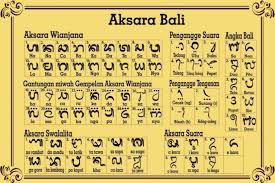
Unlike an alphabet where each letter represents a single consonant or vowel, Aksara Bali is a syllabary, meaning each character inherently contains a vowel sound. The core of the system is the aksara wianjana, a set of 33 consonant characters, each pronounced with the inherent vowel ‘a’ (like the ‘a’ in ‘father’). For example, the character ‘ᬓ’ is inherently ‘ka’, and the character ‘ᬕ’ is ‘ga’. This foundational structure is similar to other Brahmic scripts but possesses a distinct Balinese artistic flair in its loops and curves.
To alter this inherent vowel or to create a pure consonant, a complex system of diacritical marks called pangangge is used. These marks are placed above, below, or beside the consonant to change the sound to ‘i’, ‘u’, ‘e’, ‘o’, or to silence the vowel altogether. This layered system allows the script to represent the nuanced sounds of the Balinese and Sanskrit languages with remarkable precision, though it requires a trained eye to distinguish between the subtle variations of the diacritical marks.
The Role of Aksara Wianjana (Consonants)
The 33 aksara wianjana form the backbone of the writing system, and they are traditionally ordered according to Sanskrit linguistic principles, categorized by where in the mouth the sound is produced (guttural, palatal, cerebral, dental, labial). For a learner, memorizing this sequence—beginning with ‘ha’, ‘na’, ‘ca’, ‘ra’, ‘ka’—is the first major milestone. These characters are not merely phonetic tools; each is believed to have a divine origin and is associated with a specific Hindu deity, imbuing the very act of writing with spiritual significance.
In practical use, these consonants are the primary components for writing everyday Balinese words and names. However, their usage is not always straightforward. The script distinguishes between formal, Sanskrit-derived literary forms (aksara suara for vowels) and more simplified versions used in common writing. A deep understanding of the wianjana is essential for anyone aiming to move beyond basic recognition and into the realm of accurate transcription or calligraphy, as misplacing a diacritical mark can completely alter a word’s meaning.
Mastering the Pangangge (Diacritical Marks)
If the consonants are the body of Aksara Bali, the pangangge are the soul that gives them voice and meaning. This category includes marks like pangangge suara (vowel diacritics), pangangge tedung (marks that silence the inherent vowel), and pangangge panegah (used for Sanskrit words). Mastering these small, complex marks is where most learners face their greatest challenge, as a single misplaced dot or line can transform a sacred word into a mundane object, or worse, an inappropriate phrase.
There are specific pangangge for each vowel sound. For instance, to change ‘ka’ (ᬓ) to ‘ki’, a mark called ulu (a small loop) is placed above the consonant. To make it ‘ku’, a mark called suku is placed below. The pangangge tengenan, a small circle or line, is used to kill the inherent vowel, creating a pure consonant sound. The visual interaction between the consonant’s main form and its attached diacritics creates the distinct, vertically layered aesthetic that makes the script so visually striking and technically challenging to replicate in typeface design.
Aksara Swalalita and Aksara Modre
Beyond the standard syllabary, Aksara Bali encompasses specialized subsets that reveal its depth and complexity. Aksara swalalita are a set of characters used exclusively for writing the Balinese language, representing sounds that are not found in Sanskrit. These characters were developed locally to accommodate the native lexicon, showcasing the script’s evolution as a living tool for daily communication, not just a sacred relic. They are essential for writing traditional Balinese stories, songs, and poetry accurately.
At the pinnacle of the script’s hierarchy are the aksara modre, a set of mystical, secret characters used by high priests in powerful religious rituals. These symbols are not meant for everyday writing; they represent cosmic principles, deities, and potent mantras. Their forms are often more abstract and are believed to contain immense spiritual energy. Misusing or casually displaying aksara modre is considered a serious cultural offense, underscoring the point that Aksara Bali exists on a spectrum from the practical to the profoundly sacred.
The Art of Calligraphy and Sacred Writing
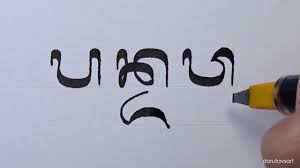
The physical act of writing Aksara Bali is considered a form of meditation and an offering. Traditional calligraphy is performed with a pengrupak (a small knife) on lontar leaves, requiring immense patience and a steady hand. The process involves scratching the characters onto the dried leaf, then applying black ink made from soot or charcoal to fill the incisions, making the text legible. This practice is still taught in certain traditional schools (pesantian) to preserve the art form and the discipline it instills.
In contemporary Bali, calligraphy has experienced a renaissance, moving from sacred manuscripts to the walls of hotels, art galleries, and public monuments. Artists experiment with the script’s aesthetic qualities, using paint, wood, and metal to create modern interpretations. This evolution raises important questions about cultural preservation versus commercialization. While seeing Aksara Bali in a luxury resort exposes tourists to its beauty, it also risks detaching the script from its sacred context, a tension that local cultural guardians are navigating with careful consideration.
A Comparative Overview of Writing Systems
To fully appreciate the unique position of Aksara Bali, it is helpful to compare it with other major writing systems in the region. This comparison highlights its structural complexity and its place within the larger family of Southeast Asian scripts. The table below provides a clear breakdown of these key distinctions.
| Feature | Aksara Bali | Javanese Script (Hanacaraka) | Latin Alphabet |
|---|---|---|---|
| Script Type | Abugida (Syllabary) | Abugida (Syllabary) | Alphabet |
| Inherent Vowel | Yes, all consonants have ‘a’ | Yes, all consonants have ‘a’ | No |
| Primary Use | Ritual, sacred texts, cultural preservation | Cultural preservation, royal history | Official language, daily communication |
| Diacritical Marks | Extensive pangangge system | Similar but visually distinct system | None; uses separate letters |
| Spiritual Significance | High; considered sacred | High; tied to Javanese mysticism | Low; considered functional |
| Learning Curve | High; requires mastery of marks | Very high; many historical variations | Low; widely taught and digitized |
The Decline and Revival in the Modern Era
The 20th century brought unprecedented challenges to the survival of Aksara Bali. The Dutch colonial administration, followed by the Indonesian government’s promotion of Bahasa Indonesia (written in the Latin alphabet), systematically pushed the traditional script to the margins. Schools stopped teaching it, and for a generation, the ability to read and write the script became a specialized skill known only to a few elders and priests. By the late 20th century, linguists feared that the script was on the brink of extinction, a casualty of modernization and national unification.
However, the fall of the Suharto regime in 1998 ushered in an era of regional autonomy and cultural revival. Balinese leaders, recognizing that language is the soul of a culture, launched aggressive revitalization programs. The script was reintroduced as a compulsory subject in elementary schools across Bali. Local communities began hosting script-writing competitions, and a new generation of Balinese youth, armed with cultural pride and digital tools, began to champion their heritage, sparking a remarkable turnaround from near-extinction.
Aksara Bali in the Digital Age
One of the most significant drivers of the script’s revival has been its integration into the digital world. The advent of Unicode support for Aksara Bali in 2009 was a watershed moment, allowing the script to be rendered consistently across different operating systems and devices. This technical standardization paved the way for the development of Balinese fonts, keyboard layouts for smartphones, and even social media content created entirely in the traditional script. The digital realm has transformed the script from an artifact into a living, functional tool for daily communication.
Today, young Balinese people can text each other using Aksara Bali on platforms like WhatsApp and Instagram. There are online dictionaries, YouTube tutorials, and even apps that help translate Latin script into the syllabary. This digital resurgence is not without its challenges, as the quality of fonts varies, and not all digital interfaces handle the complex stacking of diacritical marks perfectly. Nevertheless, the script’s presence in cyberspace has given it a new generation of users and a relevance that seemed impossible just two decades ago.
Reading and Writing in Practice: A Guide
For the dedicated learner, beginning the journey with Aksara Bali requires a structured approach. The first step is to memorize the core 18 characters of the wianjana (the aksara dasar) through constant repetition and writing practice. It is crucial to learn not just the form of the character but its order, as this is the foundation for using dictionaries and understanding traditional texts. Writing by hand, ideally with a pen on paper, helps build the muscle memory necessary to distinguish the often-subtle differences between similar characters.
The second phase involves mastering the pangangge. A practical method is to practice writing a single consonant with all its vowel modifications (e.g., write ‘ka’, then ‘ki’, then ‘ku’, etc.) in a grid format. This helps visually internalize where each mark is placed relative to the main character. Learners should also focus on padas, the punctuation marks used to separate sentences and paragraphs. While challenging, the goal of being able to read a simple street sign or a name on a temple offering is an achievable milestone that provides immense motivation to continue.
Common Misconceptions and Clarifications
A prevalent misconception is that Aksara Bali is simply the Balinese language written in a different font. In reality, it is a distinct script with its own rules, grammar, and syntax that can be used to write both Balinese and Sanskrit. Another common error is assuming it functions like an alphabet, leading people to incorrectly spell words by stringing together consonant-vowel pairs without using the proper diacritical marks to silence the inherent vowels.
There is also a misconception regarding its accessibility. Many visitors to Bali believe the script is a secret code understood only by priests. While it is certainly sacred and complex, it is now a part of the public school curriculum. As I Nyoman Suarsa, a Balinese cultural preservationist, notes, “Aksara Bali is not a mystery to be kept from outsiders. It is our identity to be shared. The more people who learn it, the stronger our culture becomes.” This sentiment underscores the open yet respectful approach to sharing this cultural treasure with the world.
The Script in Religious and Ritual Life
The most vital context for Aksara Bali remains its spiritual function within Balinese Hinduism. The script is indispensable for rituals, from the simplest daily offerings (banten) to the grandest temple ceremonies (odalan). Offerings of food, flowers, and incense are incomplete without the placement of a small square of palm leaf inscribed with specific characters. These inscriptions serve as invitations to deities and benevolent spirits, transforming the physical offering into a sacred conduit.
Priests (pedanda and balian) use the script to create holy water (tirta), a process that involves chanting mantras while writing specific characters into a vessel of water. The script is also central to the creation of rajahan, protective drawings or inscriptions placed on doorways, cars, and even the body. These rajahan are believed to provide spiritual protection, warding off negative energies and ensuring safety. In this context, Aksara Bali is not merely a form of communication but a direct tool for spiritual practice, a living link between the human and the divine.
Regional Variations and Dialects
While the core structure of Aksara Bali is standardized, subtle regional variations exist across the island. The script as written in the southern cultural hub of Denpasar may feature slightly different stylistic flourishes compared to the version used in the more traditional northern regency of Singaraja or the eastern region of Karangasem. These differences are most apparent in informal handwriting and local calligraphy styles, reflecting the decentralized nature of Balinese cultural life where local traditions remain strong.
These regional nuances also extend to vocabulary and the use of certain pangangge. For instance, some areas may use a particular diacritical mark more frequently for a specific sound, while another region uses a different mark for the same phonetic purpose. For linguists and cultural purists, these variations are not errors but valuable indicators of the script’s organic evolution. Understanding these local flavors is essential for anyone aiming to conduct in-depth ethnographic or linguistic research in specific parts of Bali.
Educational Initiatives and Cultural Preservation
The survival of Aksara Bali is largely attributed to a concerted, multi-pronged educational effort spearheaded by the Balinese provincial government and local NGOs. The core of this initiative is the mandatory curriculum in elementary schools, where children learn the script from the first grade. This institutional backing ensures that every young Balinese person gains at least a foundational literacy in their ancestral script, a policy that has successfully reversed the literacy decline of previous decades.
Beyond formal schooling, a network of community-based pesantian (traditional learning groups) provides advanced instruction in reading, writing, and the creation of lontar manuscripts. These groups are often led by local elders and priests who impart not just the mechanics of the script but its philosophical and spiritual underpinnings. The government also supports annual competitions, including ngrupak (lontar carving) contests, which foster a sense of pride and accomplishment. This holistic ecosystem of formal and informal education is the bedrock of the script’s modern resurgence.
Aksara Bali in Architecture and Public Space
One of the most visible manifestations of the script’s revival is its prominent use in architecture and public spaces across Bali. In the last two decades, a provincial regulation mandated that all public signage, including street names, government building titles, and tourism information boards, must be displayed in both the Latin alphabet and Aksara Bali. This policy has transformed the visual landscape of the island, making the script an unavoidable and integral part of the everyday environment.
This architectural integration extends to new buildings and hotels, which increasingly incorporate the script into their design. Elaborate carvings of aksara adorn entrance gates (candi bentar), and modern buildings feature the script in metalwork, reliefs, and even as patterns in paving stones. This ubiquity serves a dual purpose: it reinforces cultural identity for Balinese residents and creates a unique sense of place for visitors. For tourists, seeing the script on a street sign in Ubud or a government office in Denpasar is a constant, tangible reminder that they are in a place with a deep and distinct cultural history.
Challenges in Standardization and Typography
Despite the script’s digital progress, significant challenges remain in the realms of standardization and typography. The complex system of diacritical marks that attach above and below the main consonant poses a persistent problem for font designers. Creating a digital font that correctly renders all possible combinations of consonants and pangangge is a technical hurdle that not all fonts manage successfully. This leads to inconsistencies where a document typed in one font may display incorrectly when opened on a device with a different font, hindering reliable digital communication.
Furthermore, there is an ongoing debate regarding orthographic standardization. As the script transitions from a sacred, priestly tool to a medium for modern, secular communication, scholars and educators are grappling with how to standardize the spelling of contemporary Indonesian and foreign loanwords. Should new characters be created, or should existing combinations be used? This lack of complete consensus can create confusion for learners and poses a barrier to the script’s adoption for broader, more official uses beyond cultural and religious contexts.
Economic and Tourism Impact
The revival of Aksara Bali has also created a significant niche within the island’s tourism-driven economy. There is a growing market for products that feature the script, from high-end calligraphy art and custom-made lontar manuscripts to branded merchandise like t-shirts, tote bags, and jewelry. Local artists and artisans who specialize in the script have found a profitable outlet for their skills, selling to both Balinese customers and international tourists seeking authentic, meaningful souvenirs.
This economic dimension is a double-edged sword. It provides livelihood opportunities and raises awareness of the script, but it also carries the risk of cultural commodification. The proliferation of mass-produced items with incorrectly written or contextually inappropriate Aksara Bali is a common sight in souvenir markets. Responsible tourism operators and cultural advocates are working to educate visitors about the difference between respectful, authentic products and superficial, often erroneous, appropriations, encouraging a market that values cultural integrity over mere aesthetics.
The Future of Aksara Bali
Looking ahead, the future of Aksara Bali appears robust, though it will continue to navigate the complex currents of globalization, technology, and cultural change. The current generation of Balinese youth, who have grown up learning the script in school and using it on their phones, are not just preservers but active innovators. They are creating new content, from comics and poetry to social media memes, in their ancestral script, ensuring its continued relevance in a contemporary context.
The next frontier likely involves deeper integration with artificial intelligence and machine learning. Tools for optical character recognition (OCR) that can scan and digitize ancient lontar manuscripts are in development, promising to unlock centuries of knowledge for scholarly research. Similarly, improved voice-to-text and text-to-speech applications in Aksara Bali could further bridge the gap between oral and written traditions. The script’s journey from sacred palm leaves to digital screens is a testament to its resilience and the deep cultural commitment of the Balinese people to ensure its survival for generations to come.
Conclusion
Aksara Bali is far more than a collection of elegant curves and dots; it is a vibrant, living script that encapsulates the history, spirituality, and identity of the Balinese people. Its journey from the sacred incisions on lontar manuscripts to the digital texts of a modern generation is a powerful narrative of cultural resilience. The script stands as a testament to the community’s determination to preserve its unique heritage while navigating the complexities of the 21st century.
For anyone seeking to truly understand Bali, engaging with its script offers an unparalleled depth of insight. Whether seen on a temple offering, carved into a government building, or typed in a text message, Aksara Bali connects the past to the present. Its continued study, respectful use, and creative evolution will ensure that this remarkable cultural treasure remains a vital part of the island’s identity, not as a relic to be admired from a distance, but as a dynamic tool for communication, art, and spiritual practice for centuries to come.
FAQ
What is the difference between Aksara Bali and the Balinese language?
Aksara Bali, also known as the Balinese script, is the writing system used to write the Balinese language and Sanskrit. The Balinese language is the spoken language itself. Think of it like the Latin alphabet: the alphabet is the script, and English, Spanish, and French are the languages written with it. Similarly, Aksara Bali is the visual form that gives the spoken Balinese language a written, and often sacred, representation.
Is Aksara Bali difficult to learn for a non-native speaker?
The complexity of Aksara Bali lies in its syllabic structure and its extensive system of diacritical marks (pangangge). For a non-native speaker, the initial learning curve is steeper than that of the Latin alphabet. However, with consistent practice, focused study on the 33 consonants and the most common vowel modifiers, achieving basic literacy is an attainable and rewarding goal, especially with the wealth of digital resources now available.
Can I see Aksara Bali used in everyday life in Bali today?
Yes, absolutely. Thanks to a provincial regulation, all public signage—including street names, government buildings, and schools—must display the script alongside the Latin alphabet. You will also see it on temple architecture, in offerings (banten), on traditional clothing, and increasingly in art, merchandise, and even social media posts created by young Balinese people.
What are lontar manuscripts?
Lontar manuscripts are the traditional form of books in Bali, made from the dried and processed leaves of the rontal (palm) tree. For centuries, sacred texts, historical chronicles, legal codes, and works of literature were inscribed on these leaves using a small knife. These manuscripts are the primary source of ancient knowledge written in Aksara Bali and are highly valued as cultural heirlooms.
Is it appropriate for tourists to get a tattoo of Aksara Bali?
This is a sensitive topic. While many Balinese people are proud to share their culture, it is crucial to approach getting a script tattoo with the utmost respect. Before doing so, ensure the text is absolutely correct in both meaning and spelling by consulting a native speaker or cultural expert. Avoid using sacred aksara modre or phrases with deep religious significance as personal decoration. A respectful approach that honors the script’s sacred origins is always the best practice.